Manually Operated Seed Dressing Drum About
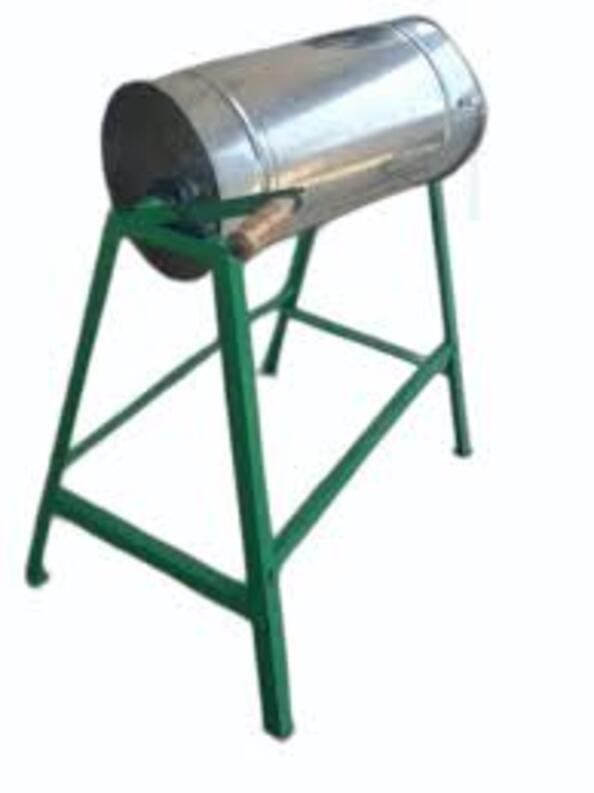
A Manually Operated Seed Dressing Drum is an agricultural equipment used for uniform mixing and coating of seeds with fungicides, pesticides, or bio-fertilizers before sowing. It ensures proper seed treatment, which helps in protecting crops from diseases and improving germination rates.
The drum is operated manually with a rotating handle mechanism, allowing easy and uniform mixing of seed and chemical solutions without the need for electricity. It is widely used in seed processing units, farms, and agricultural research centers.
Manufactured using high-quality mild steel or stainless steel, the seed dressing drum is strong, durable, and corrosion-resistant. Its sturdy frame ensures stability during operation, while the smooth rotating design ensures efficient seed coating.
Key Features:
- Uniform seed coating and treatment
- Manually operated, no electricity required
- Strong and durable metal construction
- Easy to operate and maintain
- Suitable for various types of seeds
- Ensures improved seed protection and germination
- Compact and portable design
Applications:
- Seed treatment before sowing
- Agricultural farms and seed processing units
- Research and agricultural laboratories
- Fertilizer and pesticide coating processes
- Crop protection and production improvement
Robust Build for Agricultural DemandsConstructed from mild steel and coated with anti-corrosive paint, this seed dressing drum is built to last in challenging agricultural environments. It can withstand moderate impacts and features a sturdy freestanding design. Standard blue or green colors enhance its professional appearance, while the protective drum lid ensures operator safety during use.
Easy, Manual Operation and CleaningWith its manual rotating handle, this device requires no external power, offering flexibility and mobility in field or storage. The detachable drum allows for easy access and swift, efficient cleaning, making maintenance straightforward. Operator-friendly features let you control the dressing process with precision, depending on individual batch requirements.
Portable and Versatile PerformanceWeighing approximately 25-30 kg, the drum is portable and can be easily relocated using its optional wheels. Its 20-litre capacity and 400 mm drum width accommodate a broad range of seed types and batch sizes (0.5-5 kg), making it suitable for wheat, pulses, and more. The design supports single-batch operation, perfect for tailored seed treatment needs.
FAQ's of Manually Operated Seed Dressing Drum:
Q: How does the manually operated seed dressing drum ensure uniform chemical coating on seeds?
A: The drum uniformly distributes chemical treatments across the seeds as you rotate the manual handle, ensuring an even coating due to the internal baffle design and consistent rotational motion controlled by the operator.
Q: What seeds can be processed using this seed dressing drum?
A: This device is suitable for a variety of seed types, including wheat, pulses, and other agricultural seeds, handling batch sizes from 0.5 to 5 kg per operation.
Q: Where can I use this seed dressing drum, and is it portable?
A: The drum is ideally used in agricultural settings such as farms, seed processing facilities, or on-site treatment areas. Its portable design, with optional wheels, allows you to move it easily to your desired location.
Q: What is the cleaning process for the drum after use?
A: Cleaning is straightforward-simply detach the drum from its frame for easy access. Rinse and wipe as needed, and dry thoroughly before reassembly to maintain longevity and hygiene.
Q: When is manual seed dressing more beneficial than automated systems?
A: Manual dressing is preferable for smaller-scale operations, remote areas without electrical access, or when flexibility and batch customization are required. It is ideal for users seeking low maintenance and straightforward operation.
Q: How safe is the drum during operation?
A: A protective lid minimizes exposure to chemicals and moving parts, and the stable, freestanding structure reduces the risk of tipping, making it safe and reliable for routine agricultural use.
Q: What are the main benefits of using this manually operated device?
A: Key benefits include portability, ease of use, low maintenance, no need for an external power supply, and the ability to manage various batch sizes and seed types, making it highly adaptable for different agricultural needs.

 Send Inquiry



 Send Inquiry


 Send Inquiry