Rock Testing Machines About
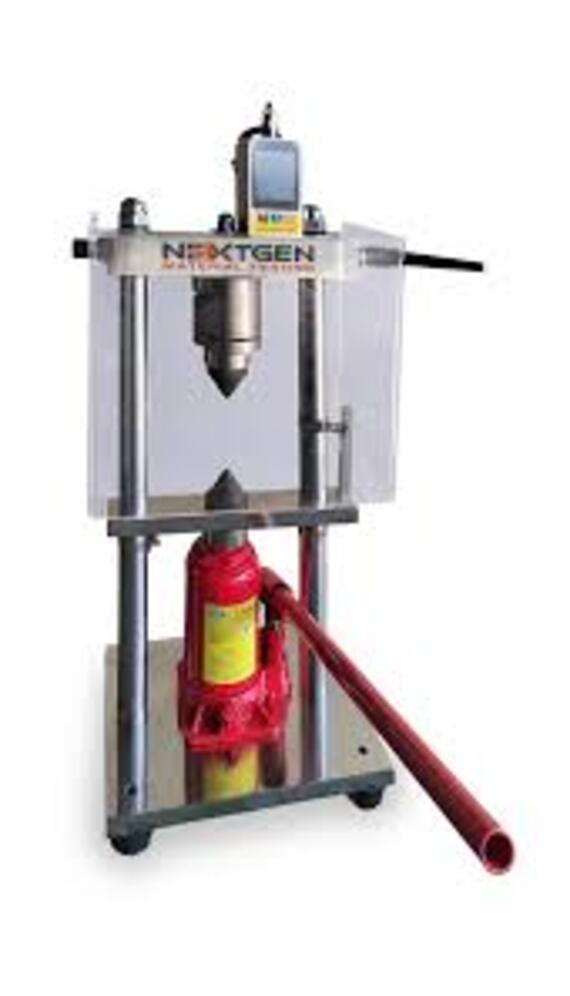
Rock Testing Machines are laboratory instruments used to determine the physical and mechanical properties of rock specimens. These machines are widely used in geology, mining, and civil engineering laboratories for quality control and research purposes.
They help in testing rock strength, durability, hardness, and deformation characteristics under different loading conditions.
Rock testing equipment may include core cutting machines, grinding machines, compression testing machines, and other sample preparation and testing devices. They are designed for accurate results, easy operation, and long service life.
Versatile Display and Operation ModesCustomize your testing process with a choice between digital or analog displays, as well as manual or automatic hydraulic loading systems. These options cater to diverse laboratory needs, ensuring efficient integration into any workflow, whether you require real-time data or traditional analog readouts.
Robust Design and Precision EngineeringWith a heavy-duty powder-coated mild steel body and precision-machined components, this machine promises exceptional durability and rust resistance, even under extended laboratory conditions. Its user-friendly flow control valve and class 1 accuracy guarantee reliable and repeatable testing outcomes every time.
Comprehensive Accessories and CertificationsThe machine comes as a complete kit, including a platen set, spacers, calibrated pressure gauge (up to 2000 kN), and a verified calibration certificate. This ensures seamless setup and compliance with industry standards, maximizing user trust and eliminating the need for additional purchases.
FAQ's of Rock Testing Machines:
Q: How does a Rock Testing Machine with hydraulic loading operate?
A: The machine utilizes a hydraulic system, controlled either manually or automatically, to apply an increasing load on rock specimens. A precise flow control valve ensures accurate rate of loading, while the display (digital or analog) allows users to monitor the applied force in real time.
Q: What specimen sizes can this Rock Testing Machine accommodate?
A: This equipment is designed for specimens up to 100 mm in diameter and 200 mm in height, making it suitable for most standard rock and aggregate samples in civil engineering and geotechnical applications.
Q: When should I use the digital versus the analog display configuration?
A: Choose the digital display for applications requiring data logging, high precision, or where clear numeric readings are advantageous. The analog display is ideal for straightforward tests or environments where electronic components are less desirable due to rugged use.
Q: Where is this Rock Testing Machine best utilized?
A: It is ideal for geotechnical laboratories, civil engineering projects, research facilities, and educational institutions across India, providing reliable testing for academic, industrial, and research purposes.
Q: What is the process for testing a rock specimen on this machine?
A: Place the prepared rock specimen between the machine's hardened platens, set the control valve to begin hydraulic loading, and monitor the load application via the calibrated gauge. Continue until specimen failure to record compressive strength, following relevant standards.
Q: What benefits does this machine offer compared to standard models?
A: Benefits include customizable load capacity (up to 200 kN), premium corrosion resistance, class 1 accuracy certification, and options for both digital and analog readouts. It comes with all necessary accessories and is supported by a calibration certificate, ensuring ready compliance and ease of use.
Q: How do I ensure accurate and safe usage of the testing machine?
A: Verify machine calibration using the provided certificate, ensure the specimen is properly positioned, and utilize the safety lock feature during operation. Follow recommended ambient temperature (5C to 45C) and voltage (220V AC) guidelines to maintain both user safety and device longevity.

 Send Inquiry



 Send Inquiry


 Send Inquiry