Specific Gravity Buoyancy Balance About
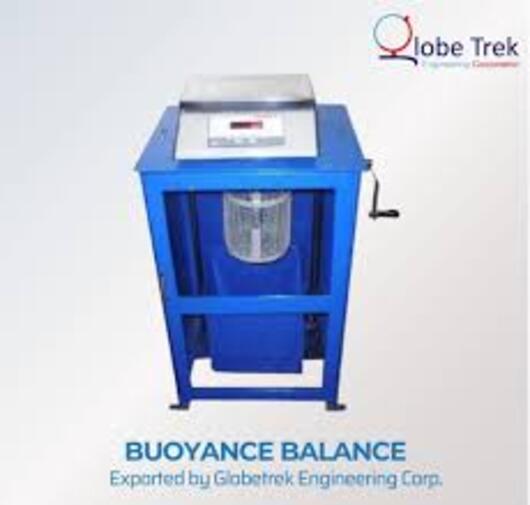
Specific Gravity Buoyancy Balance is a precision-engineered laboratory instrument used for determining the specific gravity, density, and water absorption of aggregates, concrete, and similar materials. The apparatus works on Archimedes principle, where the buoyant force acting on a submerged specimen is used to calculate its density.
The equipment comprises a rigid support frame with an integrated water tank, density basket, suspension hook, and electronic weighing balance. A mechanical lifting arrangement allows smooth immersion of the specimen in water for accurate measurement of weight in air and water.
It is widely used in civil engineering laboratories, construction material testing labs, research institutes, and quality control departments for fast and reliable testing results.
Key Features
- Sturdy mild steel / powder-coated frame construction
- High precision electronic balance with under-hook weighing
- Water-tight container with lifting mechanism
- Supplied with density basket and accessories
- Easy operation with accurate and repeatable results
- Suitable for laboratory and field testing applications
Technical Specifications
- Capacity: 5 kg / 10 kg / 15 kg (customizable)
- Sensitivity: 0.1 g to 0.5 g
- Power Supply: 220V AC, 50 Hz
- Standards: IS:2386 (Part III), ASTM C127, BS 1881
- Material: Mild steel frame with stainless steel components
Applications
- Specific gravity determination of aggregates
- Water absorption tests
- Density measurement of concrete specimens
- Soil and construction material testing
Working Principle
The apparatus operates on buoyancy principle:
- Weight of specimen measured in air
- Weight measured when submerged in water
- Difference in weight gives buoyant force
- Specific gravity calculated using standard formula
Precision Meets DurabilityWith a stainless steel pan and an anti-vibration base, this buoyancy balance offers reliable and consistent results every time you measure. Its powder-coated metal construction and rust-proof components ensure durability for repeated laboratory use, while the integrated drainage and adjustable levelling guarantee seamless, mess-free operation.
Unmatched Accuracy and ControlThe device measures specific gravity and density within a range of 0.001 to 2.5 g/cc, achieving 0.01 g accuracy and resolution. Manual operation provides hands-on control, allowing users to adjust test speed as needed for standard specimen sizes up to 1 kg. Its intuitive digital LCD enables quick result interpretation within 3 seconds.
Ready for Laboratory and Quality ControlDesigned for tabletop use, this equipment is ideal for laboratories, quality assurance, and research environments requiring highly accurate aggregate or solid specimen density measurements. Fully mechanical and requiring no power supply, it is perfect for facilities emphasizing consistency, repeatability, and compliance with global standards.
FAQ's of Specific Gravity Buoyancy Balance:
Q: How does the Specific Gravity Buoyancy Balance determine specific gravity or density?
A: The balance applies the Archimedes Principle, measuring the difference in specimen weight in air and submerged in water. This enables precise calculation of specific gravity or density for aggregates and solids.
Q: What are the recommended operating conditions for this balance?
A: For accurate results, use the balance in a dust-free, vibration-free area. Maintain ambient temperatures between 5C and 45C and relative humidity up to 80% (non-condensing) as per operational guidelines.
Q: When should the drainage system be used, and how do I operate it?
A: The integrated water overflow system manages excess water during submerged weighing. After placing the specimen in the tank, the overflow automatically prevents spills, maintaining optimal water levels without manual intervention.
Q: Where can this balance be implemented in a laboratory setting?
A: Ideally, situate the balance on a stable laboratory table using its adjustable legs and leveling spirit for precise alignment. This ensures minimal external vibration and high measurement accuracy.
Q: What is the maximum specimen size and capacity for the balance?
A: The instrument can accommodate specimens up to 50 mm x 50 mm x 50 mm in size, weighing a maximum of 1 kg (or 1000 g) on the stainless steel pan, suitable for standard aggregate testing protocols.
Q: How does the manual operation benefit laboratory users?
A: Manual control allows users to regulate test speed and stroke, minimizing operational errors and enabling observation at each measurement stage for thorough quality assurance and repeatability.
Q: What makes this equipment compliant for quality control testing?
A: It adheres to IS 2386 (Part 3), ASTM C127, and C128 standards, ensuring produced results meet international requirements for aggregate and material quality assessments in construction and research.

 Send Inquiry



 Send Inquiry


 Send Inquiry