STANDARD TEST SIEVES About
Standard Test Sieves are precision laboratory instruments used for particle size analysis of aggregates, sand, soil, cement, and other granular materials. They are widely used in civil engineering, construction material testing, and research laboratories to determine the gradation and distribution of particle sizes.
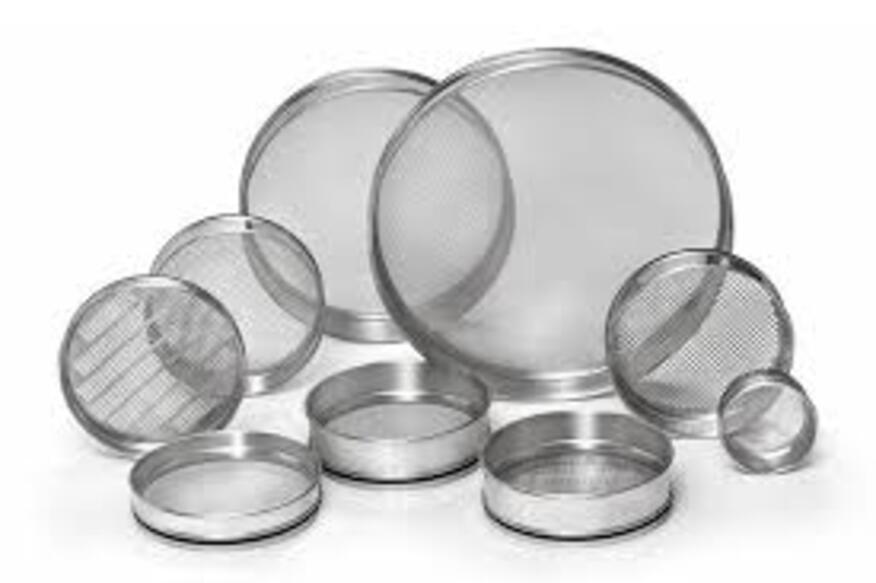
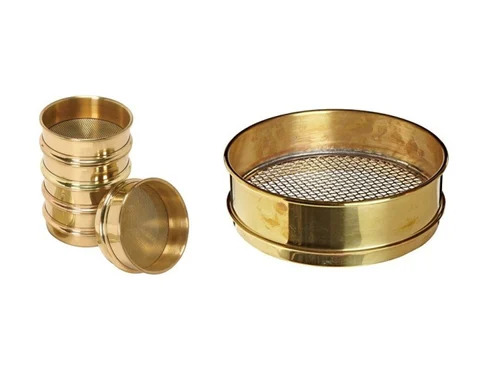
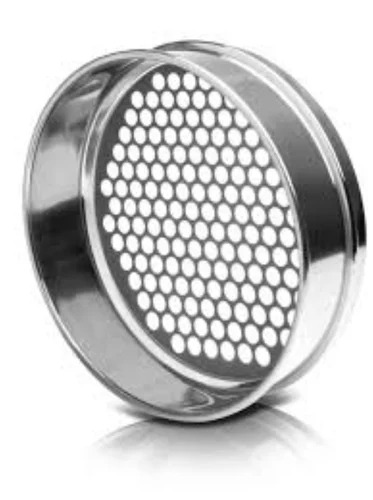
These sieves are manufactured using high-quality stainless steel or brass frames fitted with accurately woven wire mesh of specified aperture sizes. Each sieve is designed as per standard specifications to ensure reliable and consistent test results. The sieves can be stacked together for efficient sieving operations, either manually or with a sieve shaker.
Standard Test Sieves are essential tools for quality control and material classification in construction and industrial applications.
Key Features:
- High-quality stainless steel / brass construction
- Precision-woven wire mesh for accurate particle separation
- Available in a wide range of standard mesh sizes
- Durable, corrosion-resistant, and long-lasting
- Compatible with sieve shakers
- Easy to clean and maintain
Applications:
- Sieve analysis of aggregates and soil
- Cement and fine material testing
- Civil engineering laboratories
- Construction material quality control
- Mining and industrial material classification
- Research and educational institutions
Working Principle:
Material is placed on the top sieve in a stacked arrangement and subjected to shaking. Particles pass through sieves of decreasing mesh size, separating them based on size for accurate gradation analysis.
Versatile Design and Material OptionsChoose between robust brass or stainless steel frames to suit specific laboratory or industrial requirements. Both materials offer longevity and withstand exposure to chemicals, ensuring reliable data in every particle size analysis session.
Customizable for Any Laboratory SettingStandard and customizable heights make these sieves adaptable to various testing protocols, enabling precise measurements across different sample volumes. The option to stack multiple sieves improves testing efficiency and flexibility.
Exceptional Build and FinishingEvery sieve features a woven wire mesh with polished, smooth surfaces, reducing sample retention and facilitating easy cleaning. Rolled or plain edges prevent spillage and cater to distinct testing setups.
FAQ's of STANDARD TEST SIEVES:
Q: How are STANDARD TEST SIEVES used in particle size analysis?
A: They are stacked in sequential order, allowing materials to be separated according to particle size as samples pass through each woven wire mesh during laboratory testing.
Q: What materials are available for the frames of these test sieves?
A: Test sieves come with brass or stainless steel frames, both chosen for their strength, corrosion resistance, and longevity for laboratory and industrial environments.
Q: When should I choose a custom height or edge type for my sieve?
A: Custom heights or edge types should be selected when your testing protocol requires specific sample volumes or when compatibility with specialized equipment is necessary.
Q: Where are these STANDARD TEST SIEVES manufactured and supplied?
A: These sieves are manufactured, supplied, and traded in India, serving laboratories, industrial testing sites, and educational institutions nationwide.
Q: What is the process for stacking multiple sieves for analysis?
A: Multiple sieves are stacked from coarsest to finest mesh, and the material is placed in the top sieve. After shaking, particles are separated by size across the stack, facilitating detailed analysis.
Q: How does a polished and smooth finish benefit laboratory usage?
A: A polished and smooth finish reduces adherence of particles, making cleaning easier and ensuring more accurate analysis by minimizing sample loss.
Q: What are the primary benefits of using STANDARD TEST SIEVES for laboratory testing?
A: They provide reliable particle size distribution data, adaptability for different test requirements, and long-lasting performance with options to fit a wide array of testing protocols.

 Send Inquiry


 Send Inquiry


 Send Inquiry