Carbon And Sulphur Determination Apparatus About
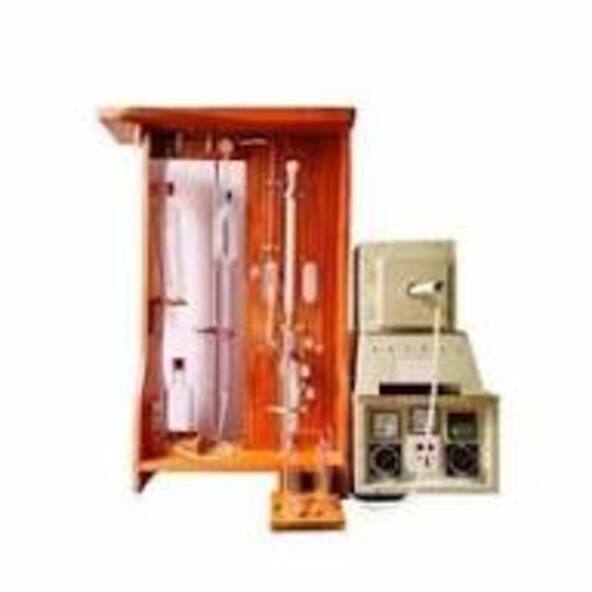
The Carbon and Sulphur Determination Apparatus is a precision laboratory instrument designed for accurate estimation of carbon and sulphur content in various materials such as steel, alloys, coal, coke, and other inorganic substances. It operates on standard analytical methods, ensuring reliable and reproducible results for quality control and research applications.
This apparatus is widely used in metallurgical laboratories, foundries, and research institutions where precise elemental analysis is critical. The system is engineered for ease of operation, durability, and consistent performance under laboratory conditions.
Key Features:
- Accurate determination of carbon and sulphur content
- Based on standard combustion/chemical analysis methods
- Robust and durable construction
- User-friendly setup and operation
- Suitable for routine and research analysis
- High precision and repeatability
Applications:
- Metallurgical and steel industries
- Foundries and casting units
- Coal and coke analysis
- Chemical laboratories
- Research and educational institutions
Technical Specifications (Typical):
- Method: Combustion / Gravimetric / Volumetric (depending on model)
- Material Compatibility: Steel, alloys, coal, coke, etc.
- Power Requirement: 220240V AC, 50 Hz
- Construction: Mild Steel / Stainless Steel with heat-resistant components
- Accessories: Combustion tubes, absorption units, reagents (optional)
Packaging Details:
Supplied in secure packaging to prevent transit damage, with all necessary accessories.
Usage Instructions:
- Prepare the sample as per standard procedure.
- Place the sample in the combustion unit.
- Initiate the heating and gas absorption process.
- Measure carbon and sulphur content using the provided system.
Safety & Maintenance:
- Operate under proper ventilation
- Handle chemicals with care
- Clean combustion tubes and components regularly
- Follow standard laboratory safety protocols
High-Temperature Precision CombustionEmploying an advanced electric combustion furnace, the apparatus is capable of reaching ambient to 1000C, allowing for precise and reliable determination of carbon (0.01-6%) and sulphur (0.01-2%) contents with 0.01% accuracy and 0.001% resolution. This technology ensures quick results-generally within 4 to 8 minutes per test-making it a trusted choice in analytical laboratories.
Robust and User-Friendly ConstructionCrafted using a powder-coated MS body with brass and stainless steel accessories, the apparatus is built for extended use in demanding environments. The smart design includes heat-resistant handles, fully protected furnace units, and a chimney attachment for safe gas exhaust, delivering both user safety and operational reliability.
Comprehensive Accessories and Easy OperationEach unit is supplied complete with combustion tube, titration set, glassware, tubing, reagent bottles, and all standard attachments. The analog-digital hybrid display and manual titration interface are intuitive, ensuring that laboratory personnel can operate the device easily and efficiently, following standard procedures for low reagent consumption.
FAQ's of Carbon And Sulphur Determination Apparatus:
Q: How does the Carbon and Sulphur Determination Apparatus operate for testing samples?
A: The apparatus combusts approximately 1g of powdered metal or alloy sample at high temperatures using an electric furnace. Gases produced during combustion are passed through a burette or digital display titration system for precise measurement of carbon and sulphur content. The end result is read from the digital analog display.
Q: What are the safety features included in the apparatus?
A: This model is equipped with heat-resistant handles and protective devices on the furnace unit, as well as a chimney attachment for safe exhaust of gases, ensuring maximum user safety during high-temperature operations.
Q: Where is this apparatus commonly used?
A: It is ideal for laboratory environments such as foundries, steel plants, research laboratories, and quality control departments that require regular carbon and sulphur analysis of metals and alloys.
Q: When should I perform maintenance on the apparatus?
A: Regular maintenance is advised after a set of tests or as recommended by your laboratory's standard operating procedure. Periodic cleaning of the furnace, glassware, and titration set, along with inspection of safety features, helps sustain accuracy and extend equipment lifespan.
Q: What is the reagent consumption per test?
A: The apparatus follows standard operating procedures to ensure low reagent consumption per test, maintaining cost-effectiveness and minimizing chemical waste in your laboratory.
Q: How accurate are the results provided by this apparatus?
A: The system achieves measurement accuracy up to 0.01%, with a resolution of 0.001%, making it suitable for precise analytical tasks as stipulated by IS, ASTM, and other relevant standards.
Q: What benefits does the manual operation provide?
A: Manual operation offers the user full control over the test procedure, allowing for flexibility, direct supervision, and fine-tuning during analysis, which is especially valued in research and quality assurance settings.

 Send Inquiry





 Send Inquiry


 Send Inquiry