HELESHAW APPARATUS About
The Hele-Shaw Apparatus is an advanced fluid mechanics laboratory setup designed to visualize and study two-dimensional streamline flow patterns of fluids. It is extensively used in engineering colleges, universities, research laboratories, and technical institutes for demonstrating laminar flow behavior around various objects and through different flow channels.
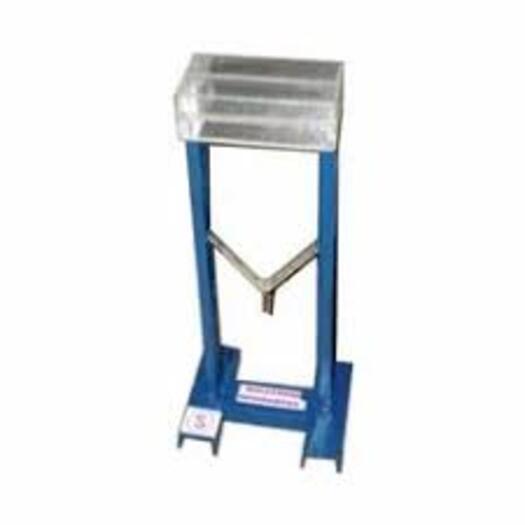
The apparatus consists of two transparent parallel plates separated by a narrow gap through which fluid flows at low velocity, creating a near two-dimensional flow field. Dye injection arrangement is provided for clear visualization of streamlines, flow separation, and flow distribution around models. The setup helps students understand fluid flow concepts such as streamline formation, equipotential lines, and flow around immersed bodies.
Fabricated using high-quality transparent acrylic and corrosion-resistant components, the Hele-Shaw Apparatus ensures durability, accuracy, and easy observation of experiments. Its compact and user-friendly design makes it ideal for laboratory demonstrations and educational research applications.
Features
- Clear visualization of streamline flow patterns
- Transparent acrylic construction for easy observation
- Compact and sturdy laboratory setup
- Corrosion-resistant and durable components
- Smooth and controlled fluid flow arrangement
- Easy operation and maintenance
- Suitable for educational and research applications
Applications
- Fluid mechanics laboratories
- Engineering colleges and universities
- Hydraulic and flow visualization studies
- Research and training institutes
- Demonstration of laminar and streamline flow
Typical Specifications
- Transparent parallel plate flow chamber
- Adjustable narrow gap arrangement
- Dye injection system for flow visualization
- Water circulation system with reservoir tank
- Flow control valves provided
- Interchangeable models for flow study
- Mounted on rigid frame structure
Working Principle
The Hele-Shaw Apparatus works on the principle of viscous fluid flow between two closely spaced transparent plates. Due to the small gap between the plates, the fluid behaves as a two-dimensional flow system. By introducing colored dye into the flowing liquid, streamline patterns and flow behavior around obstacles can be observed and analyzed effectively.
Advanced Flow Visualization ToolEngineered for educational and research settings, the Hele-Shaw Apparatus allows for instant and clear observation of fluid fronts and interface behavior. Its transparent acrylic channel, paired with high-contrast markings, enables easy demonstration and study of laminar and transitional flow patterns using colored liquids. Designed for table-top use, this apparatus combines safety, convenience, and durability.
Robust and Safe ConstructionThe frame, crafted from powder-coated mild steel, resists corrosion and daily wear, while the acrylic channel offers excellent clarity and durability. Rounded edges enhance safety during frequent handling, and all end connections are leak-proof to prevent spills during laboratory demonstrations. This ensures a secure and long-lasting experience.
Flexible and Easy OperationWith its needle valve for precise flow regulation, manual control mode, and adjustable flow settings, the Hele-Shaw Apparatus accommodates various experimental conditions. Quick couplers and a drain valve simplify setup, testing, and cleanup, while easy disassembly facilitates routine maintenance. These features make it a reliable choice for diverse educational applications.
FAQ's of HELESHAW APPARATUS:
Q: How is the Hele-Shaw Apparatus used for flow visualization in laboratories?
A: To visualize fluid flow, colored liquids are introduced through multiple syringe injectors with fine needles, and the desired flow pattern is achieved by adjusting the needle valve. This enables clear observation of laminar and transitional flows within the transparent acrylic channel, suitable for both teaching and research demonstrations.
Q: What materials are used in the construction of the Hele-Shaw Apparatus and why?
A: The channel is made from transparent acrylic, providing clarity for visual studies, while the frame uses powder-coated mild steel to ensure structural strength and corrosion resistance. These materials ensure durability, safety, and ease of cleaning.
Q: When should the apparatus be disassembled for cleaning and maintenance?
A: It is recommended to disassemble the Hele-Shaw Apparatus after every series of experiments or when changing test fluids. Easy disassembly allows thorough cleaning, preventing residue build-up and maintaining optimal performance for future demonstrations.
Q: Where can the Hele-Shaw Apparatus be installed and operated?
A: This apparatus is designed for table-top installation in laboratories, lecture rooms, or research centers. Its compact size and manual operation make it suitable for a variety of educational and training environments without the need for specialized infrastructure.
Q: What is the process for regulating flow and injecting dyes during an experiment?
A: Flow is manually regulated using the needle valve to adjust the rate precisely. Multiple syringes with fine needles are used for dye injection, allowing clear visualization of fluid fronts and interface movement within the Hele-Shaw cell.
Q: How does the apparatus benefit educational and research applications?
A: It enables real-time demonstration of fluid mechanics concepts, from laminar to transitional flow, enhancing understanding through visual learning. The apparatus supports hands-on experimentation and is widely used for training and teaching in engineering disciplines.
Q: What types of fluids and flow ranges are supported by the Hele-Shaw Apparatus?
A: The unit is suitable for a variety of colored liquids, providing visualization across a range from laminar to transitional flows. Its flexible regulation allows users to explore different scenarios and fluid behaviors effectively.

 Send Inquiry






 Send Inquiry


 Send Inquiry