Temperature Humidity Chamber About
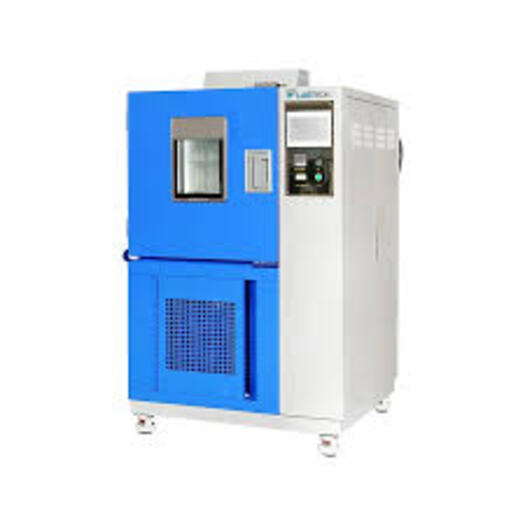
It is a sealed, insulated enclosure equipped with systems to precisely regulate both temperature and humidity. These chambers can reproduce a wide range of environmental conditionsfrom hot and humid to cold and dryallowing users to study how products behave over time.
Key Features
- Wide temperature range: Typically from 20C to +80C (advanced models may go beyond this range)
- Humidity control: Usually 20% to 95% relative humidity (RH)
- Digital/programmable controller: Enables setting constant or cyclic test conditions
- Heating and cooling system: Uses heaters and refrigeration units
- Humidification system: Adds moisture via steam or ultrasonic methods
- Dehumidification system: Removes excess moisture using cooling coils or desiccants
- Air circulation fan: Maintains uniform environmental conditions
- Observation window: For monitoring samples without disturbing conditions
Working Principle
The chamber operates by integrating multiple systems:
- Heating elements raise the internal temperature
- Refrigeration system lowers temperature when needed
- Water-based humidifier increases humidity
- Cooling/dehumidifying unit reduces moisture levels
- Sensors continuously monitor temperature and humidity, and a controller adjusts the systems to maintain the set values accurately
Uses
- Electronics testing: Performance under heat and moisture
- Pharmaceutical stability testing
- Automotive component testing
- Material research: Plastics, metals, rubber, textiles
- Food and packaging shelf-life studies
Types
- Benchtop chambers: Small-scale laboratory use
- Walk-in chambers: Large chambers for bulk or industrial testing
- Programmable (cyclic) chambers: Simulate varying environmental conditions over time
Precision and Versatility for Environmental TestingEngineered to handle rigorous testing scenarios, this chamber delivers precise control over both temperature and humidity. The touch-screen digital interface makes programming cycles and managing test parameters straightforward. With the ability to simulate extreme temperatures and broad humidity ranges, it supports the qualification and reliability assessment of sensitive electronic and electrical devices.
Robust Construction and Safety FeaturesBuilt using SUS#304 stainless steel and insulated with polyurethane foam, the chamber offers excellent thermal stability and durability. The integrated audio-visual alarm system and over-temperature protection add essential safety layers, while the large viewing window and internal LED lighting facilitate continuous observation during tests.
User-Friendly Operation and Data ManagementThe intuitive programmable digital controller, automatic water filling system, and lockable heavy-duty wheels enable seamless operation and mobility. USB data logging and RS-232 interface ensure easy recording and transfer of test data, making it suitable for comprehensive quality control and research documentation.
FAQ's of Temperature Humidity Chamber:
Q: How do I operate the Temperature Humidity Chamber for testing electronic components?
A: Simply place your specimens inside the stainless steel chamber, use the touch-screen digital controller to set your desired temperature and humidity range, and start the test cycle. The system is fully programmable and handles water supply and temperature adjustments automatically.
Q: What safety features does this chamber offer during operation?
A: The chamber includes an over-temperature audio-visual alarm system and built-in over-temperature protection. Its viewing window allows you to observe tests safely, and the system's insulation reduces external heat transfer. Optional UPS backup offers power protection during outages.
Q: When should I consider using this chamber for my testing requirements?
A: This chamber is ideal for simulating environmental conditions essential for product development, quality control, and reliability testing, especially for electronic components, electrical assemblies, and materials requiring stringent stability and endurance verification.
Q: Where can the chamber be installed for optimal performance?
A: Install the chamber in an environment with ambient temperatures between 5C and 35C, on a flat floor to utilize its heavy-duty lockable wheels. Ensure access to single-phase 220V AC power and adequate ventilation for air-cooled operation.
Q: What benefits does the chamber offer in terms of data management and traceability?
A: The built-in USB data logger and RS-232 interface allow seamless recording and export of testing data, enabling robust documentation, analysis, and compliance with industry standards. The touchscreen controller simplifies monitoring and adjustment throughout test cycles.
Q: How is humidity controlled and generated within the chamber?
A: Humidity is managed using a steam generator that can achieve levels from 20% to 98% RH. The automatic water filling system ensures continuous, uninterrupted humidity control tailored to your programmed cycles without manual intervention.
Q: What is the maximum number and size of specimens that can be tested simultaneously?
A: You can test up to 10 specimens at once, each measuring up to 350 mm x 350 mm x 350 mm, within the 150-liter chamber capacity, providing flexibility for various component sizes and multiple sample testing in a single run.

 Send Inquiry



 Send Inquiry


 Send Inquiry