About Hospital Autoclave & Sterilizers
Product Name: Hospital Autoclave & Sterilizer
Material: Stainless Steel (SS 304/316)
Capacity: 30 L to 500 L (or more)
Application: Sterilization of medical instruments and materials
Automation Grade: Manual / Semi / Fully Automatic
Product Description:
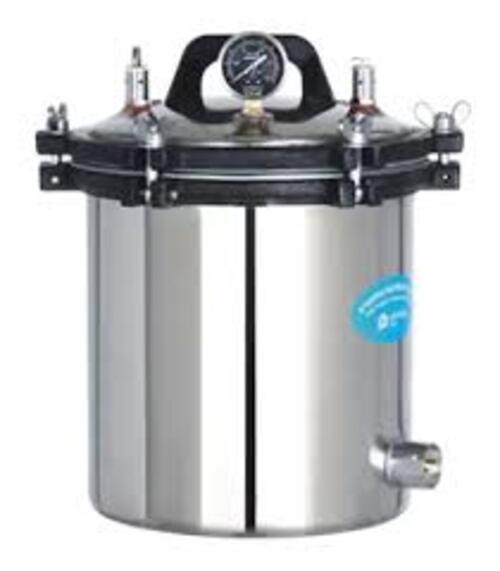
Hospital Autoclave & Sterilizers are used for sterilizing surgical instruments, dressings, and laboratory equipment using high-pressure saturated steam. These units operate at temperatures of 121C to 134C ensuring complete elimination of bacteria and pathogens. Manufactured with high-grade stainless steel, they offer durability, safety, and efficient performance. Available in vertical, horizontal, and portable models, these sterilizers are widely used in hospitals, clinics, and research laboratories.
Exceptional Sterilization PerformanceEquipped with a robust 2.5 kW power supply and a high-quality stainless steel chamber, the autoclave ensures rapid and consistent sterilization cycles between 15 to 30 minutes. Its advanced temperature resistance up to 134C delivers comprehensive microbial elimination, ensuring patient and staff safety during use.
Safety and Convenience Built-InDesigned with multiple user-centric safety features, including automatic pressure cut-off, thermostatic control, a secure locking lid, and a water level indicator, this autoclave provides peace of mind and operational reliability. The durable wheels also offer straightforward movability within any medical setting.
Versatile Applications in Healthcare and ResearchWith a 45-liter capacity and robust construction using stainless steel and mild steel, this autoclave is ideal for hospitals, clinical laboratories, pharmaceutical industries, and research institutes. It accommodates a wide range of instruments and equipment, supporting various sterilization requirements.
FAQ's of Hospital Autoclave & Sterilizers:
Q: How does the autoclave ensure effective sterilization of medical instruments?
A: The autoclave uses high-pressure saturated steam at an operating pressure of 15 psi and temperatures as high as 134C, maintaining these conditions for 15 to 30 minutes. This effectively eliminates bacteria, viruses, and other pathogens from instruments, ensuring thorough sterilization for safe use.
Q: What types of items can be sterilized in this autoclave sterilizer?
A: The autoclave is suitable for sterilizing a variety of medical and laboratory items, including surgical instruments, glassware (excluding items explicitly marked as no glass), dressings, and various laboratory and pharmaceutical equipment. Its 45-liter capacity accommodates both large and numerous items.
Q: When should I perform routine maintenance on this hospital autoclave?
A: Routine maintenance is recommended after every set number of sterilization cycles or as specified by the manufacturer. Regular checks of the safety valve, pressure gauge, water level indicator, and heater are essential. Always follow the manufacturer's service schedule for optimal operation.
Q: Where is this autoclave typically installed within a medical facility?
A: This floor-standing autoclave is designed for use in sterilization rooms, operating theaters, laboratories, or any area within hospitals, clinics, or research institutes where sterile instruments are required. The castor wheels allow for easy relocation as operational needs change.
Q: What is the process for operating this autoclave sterilizer?
A: To operate, load instruments inside the chamber, add 5-7 liters of water, secure the wing-nut or radial locking lid, and set the control. The system automatically regulates pressure and temperature, with manual or analog controls for adjustments. After the sterilization cycle completes, safely release steam and remove items when pressure normalizes.
Q: How does the safety lock system benefit users during operation?
A: The safety lock mechanism ensures that the lid cannot be opened while the chamber is pressurized, preventing accidental exposure to hot steam or pressure. This feature is complemented by automatic pressure cut-off and thermostatic control for additional safety during operation.

 Send Inquiry



 Send Inquiry


 Send Inquiry