Meteorological Stevenson Screen About
Ordinary Rain Gauge Description
The Ordinary Rain Gauge is a simple meteorological instrument used to measure the amount of rainfall at a specific location over a given period of time. It collects rainwater through a funnel and stores it in a measuring cylinder for accurate reading.
The instrument works on a basic collection and measurement principle, where the rainfall is directly measured in millimeters using a graduated container. It is widely used for daily rainfall monitoring in weather stations and field observations.
Made from durable and weather-resistant materials, the rain gauge ensures reliable performance under outdoor conditions. It is easy to install, simple to use, and requires very low maintenance.
Features
- Simple and accurate rainfall measurement
- Easy to install and operate
- Weather-resistant construction
- Low maintenance design
Applications
Used in meteorological departments, agriculture, hydrology, and environmental studies.
If you want, I can also make a very short 34 line version for listing titles
Meteorological Stevenson Screen
Category
Meteorological Instruments / Weather Station Accessories
Meteorological Stevenson Screen Description
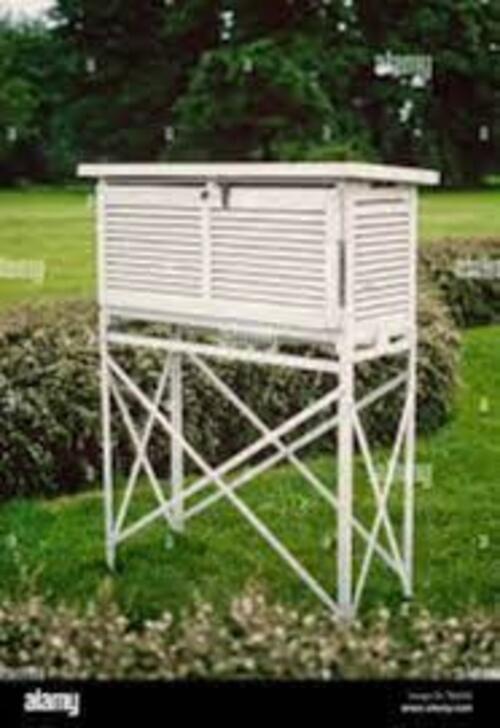
The Meteorological Stevenson Screen is a standard weather instrument shelter used to protect sensitive meteorological instruments such as thermometers, hygrometers, and data loggers from direct sunlight, rain, and dust while allowing free airflow.
It is designed with a louvered wooden or metal structure that ensures proper ventilation and maintains natural air temperature conditions inside. This helps in obtaining accurate and reliable readings of atmospheric parameters.
The Stevenson Screen is typically painted white to reflect sunlight and reduce heat absorption. It is installed at a standard height above ground level in open areas like meteorological stations and research fields.
Features
- Protects instruments from direct weather exposure
- Ensures natural air circulation
- White painted body for heat reflection
- Strong and weather-resistant construction
Applications
Used in meteorological stations, climate research, agriculture studies, and environmental monitoring.
Superior Protection and VentilationThe double-louvered design ensures optimal air circulation, crucial for maintaining the accuracy of housed instruments. Weather shielding and a white reflective finish protect equipment from direct sunlight, precipitation, and radiant heat, preventing measurement distortions during environmental data collection.
Flexible Mounting and Spacious InteriorWith freestanding legs and pole-mounting compatibility, this Stevenson Screen adapts to diverse field installations. The generous internal space and removable slatted shelf allow for easy arrangement and servicing of multiple meteorological sensors, enhancing overall usability for field operators.
Easy Maintenance and Long-lasting DurabilityRoutine upkeep is simplified by the accessible hinged door and removable shelf design. Periodic repainting and cleaning extend the screen's life and performance in harsh outdoor environments, ensuring that scientific observations remain accurate and consistent over time.
FAQ's of Meteorological Stevenson Screen:
Q: How does the double-louvered design of the Stevenson Screen benefit meteorological observations?
A: The double-louvered panels promote optimal airflow while shielding instruments from rain and direct sunlight. This helps to ensure that temperature and humidity readings are accurate and not influenced by external factors.
Q: What types of meteorological instruments can be housed inside this Stevenson Screen?
A: The screen is designed to accommodate multiple instruments, including thermometers, hygrometers, and other environmental sensors that fit within the standard interior dimensions.
Q: When is periodic maintenance necessary for a Stevenson Screen?
A: Maintenance, such as repainting the white surface and cleaning the panels or shelf, should generally be performed every few months or as needed depending on environmental conditions to preserve reflectivity and durability.
Q: Where can the Stevenson Screen be installed for optimal performance?
A: For best results, install the screen in an open outdoor location away from artificial heat sources or obstructions, using either the built-in legs for freestanding placement or a mounting pole, as required.
Q: What is the process for accessing and replacing instruments inside the screen?
A: Instruments can be accessed by unlocking and opening the hinged front door. The removable slatted shelf allows for straightforward installation, removal, or adjustment of internal sensors.
Q: How do users benefit from the weather-shielded, white-painted wooden construction?
A: The weather shielding and reflective white finish reduce thermal influence and moisture ingress, prolonging the lifespan of sensitive instruments and ensuring that readings remain unaffected by external temperature fluctuations.

 Send Inquiry



 Send Inquiry


 Send Inquiry