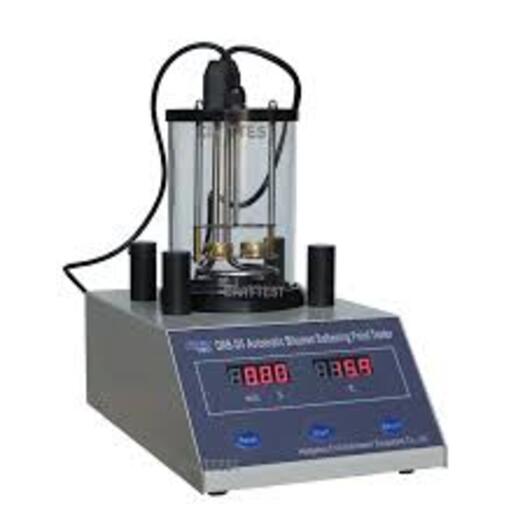
About Softening Point Apparatus
- Conforms to Ring & Ball method testing
- Brass rings and steel balls for accurate testing
- Glass beaker with heat-resistant properties
- Magnetic stirrer or manual stirring arrangement
- Precision thermometer or digital temperature display
- Uniform heating arrangement (electric heater or hot plate)
- Sturdy and corrosion-resistant construction
- Easy to operate and maintain
Technical Specifications:
- Temperature Range: Ambient to 200C (approx.)
- Heating Rate: 5C per minute (controlled)
- Ball Size: 9.5 mm diameter (standard)
- Ring Material: Brass
- Test Medium: Water or glycerin (depending on temperature range)
- Power Supply: 220230V AC, 50 Hz
- Display: Analog thermometer / Digital controller
Standards Compliance:
- ASTM D36
- IS 1205
- AASHTO T53
- BS 2000
Applications:
- Bitumen and asphalt testing
- Road construction and highway engineering
- Petroleum and refinery laboratories
- Quality control in construction materials
- Research and educational laboratories
Precision Softening Point Testing for Bituminous MaterialsThis Manual Softening Point Apparatus delivers accurate determination of the softening point of bitumen and similar materials. Equipped with standard-compliant brass rings and centering guides, the system utilizes a robust stirring mechanism and manual ball rotating rod for thorough sample agitation and reliable measurement. The durable, corrosion-resistant construction guarantees longevity and stability during repetitive use.
User-Friendly Design with Enhanced SafetyThe apparatus features an ergonomic table-top design with powder-coated and polished brass surfaces. Heat resistant handles and insulated base ensure operator safety throughout the testing process. The analog temperature scale and energy regulator provide simple yet effective control, making the equipment suitable for laboratory technicians, researchers, and quality control personnel.
Comprehensive Accessories and Compliance AssuranceSupplied with brass rings, ball centering guides, and steel balls, this apparatus meets IS:1205 and ASTM D36 standards. The borosilicate glass beaker and metallic components offer high temperature resistance and durability. Every component integrates seamlessly to deliver repeatable results, making it an ideal choice for manufacturers, suppliers, and service providers in the bituminous materials industry.
FAQ's of Softening Point Apparatus:
Q: How does the softening point apparatus with stirring mechanism work?
A: This apparatus determines the softening point of bituminous materials by heating samples in a borosilicate glass beaker with controlled temperature. As the temperature rises, steel balls placed on the sample gradually sink, and the temperature at which this occurs is noted as the softening point. The stirring mechanism, operated manually using a rotating rod, ensures uniform heat distribution throughout the test.
Q: What standards does the apparatus comply with for softening point testing?
A: The device conforms to IS:1205 and ASTM D36 standards, making it suitable for standardized testing of bitumen and similar substances in laboratories, quality control settings, and production environments.
Q: When should I use this apparatus for bitumen testing?
A: Use this softening point apparatus whenever you need to determine the softening point of bituminous materials, especially for quality control, research, or to comply with regulatory requirements as specified by IS and ASTM standards.
Q: What accessories are provided with the apparatus and what are their functions?
A: Included accessories are brass rings for holding the samples, ball centering guides for precise positioning of the steel balls, and steel balls themselves, as required by testing standards. These components ensure accurate, consistent, and standard-compliant results.
Q: Where can this apparatus be installed and used?
A: This is a table-top unit designed for laboratory use. Its stable, insulated base and heat resistant construction make it ideal for manufacturers, suppliers, and service providers involved in bituminous material testing.
Q: What are the main benefits of using this manual softening point apparatus?
A: Key benefits include accurate temperature control (up to 200C with 1C precision), safety features like heat resistant handles and base insulation, corrosion resistant materials, and compliance with international standards. Its manual control and included accessories make it both versatile and reliable for consistent testing.
Q: How is temperature regulated and monitored during operation?
A: The apparatus uses an adjustable energy regulator to manage the nichrome coil heating element. Temperature is monitored via an analog scale thermometer (range: 0C to 200C), allowing precise manual adjustment throughout the testing process.

 Send Inquiry



 Send Inquiry


 Send Inquiry