Bench Conductivity Meter About
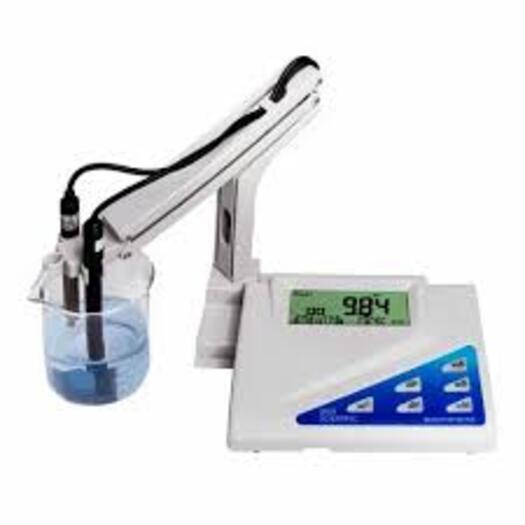
The Bench Conductivity Meter is a high-precision laboratory instrument used to measure the electrical conductivity (EC) of aqueous solutions. It helps determine the ionic content in water, making it essential for water quality analysis and industrial testing applications.
This instrument is widely used in water treatment plants, environmental laboratories, chemical industries, pharmaceutical units, agriculture labs, and research institutions.
Key Features:
- Digital LCD/LED Display: Clear and accurate conductivity readings
- High Accuracy Measurement: Ensures reliable and repeatable results
- Microprocessor-Based System: Provides stable performance
- Automatic / Manual Calibration: Multi-point calibration for better precision
- Temperature Compensation (ATC): Automatically adjusts readings based on temperature
- Stable Benchtop Design: Suitable for continuous laboratory use
- User-Friendly Operation: Simple controls with fast response
Working Principle:
The instrument measures the ability of a solution to conduct electricity using a conductivity cell (electrode system). The ionic concentration in the liquid determines the conductivity value, which is displayed digitally in S/cm or mS/cm.
Applications:
- Drinking water quality analysis
- Wastewater and effluent monitoring
- RO plant performance testing
- Pharmaceutical and chemical industries
- Soil and fertilizer testing
- Hydroponics and agriculture research
- Laboratory R&D work
Technical Specifications:
- Measuring Range: 0 200 mS/cm (varies by model)
- Resolution: 0.1 S/cm / 1 S/cm
- Accuracy: 1% / 2% of full scale
- Temperature Compensation: Automatic (ATC) / Manual
- Calibration: 1 to 3 point calibration
- Display: Digital LCD/LED
- Power Supply: 220V AC / Adapter
Advantages:
- Accurate measurement of ionic strength in liquids
- Fast and reliable results
- Easy calibration and maintenance
- Suitable for continuous laboratory use
Optional Features:
- TDS (Total Dissolved Solids) measurement mode
- Salinity measurement function
- Data storage and USB output
- Combined pH/EC/TDS multi-parameter system
Limitations:
- Requires regular electrode calibration and cleaning
- Conductivity cell may need replacement over long-term use
Advanced Temperature CompensationThis device automatically compensates for temperature variations (0C-50C), ensuring each conductivity reading remains accurate regardless of environmental shifts. Users can confidently perform measurements in laboratories or industrial settings, where temperature fluctuations are common, leading to reliable, consistent results every time.
Comprehensive Calibration and ControlWith one-to-five-point calibration, users gain flexibility in achieving precise measurements across various sample types. The meter supports both manual and automatic control modes, making it adaptable for different user preferences and processes. This design simplifies operation for both beginners and experienced technicians.
Complete Accessories and User SupportEach unit arrives with a platinum conductivity cell, standard solutions for calibration, and a user manual. These essential accessories ensure immediate, trouble-free setup and continued usability. Reliability and ease-of-use position this conductivity meter as a favored choice for laboratory and industrial applications.
FAQ's of Bench Conductivity Meter:
Q: How does the Bench Conductivity Meter automatically compensate for temperature changes during measurements?
A: The meter features automatic temperature compensation within the range of 0C to 50C. This ensures that conductivity readings are automatically adjusted to correct any temperature-related variations, providing accurate results regardless of sample or environment temperature fluctuations.
Q: What types of industries and applications can benefit from using this Bench Conductivity Meter?
A: This meter is well-suited for laboratory analyses, industrial water quality monitoring, research, and quality control processes. Its broad measuring range, precision, and reliable temperature compensation make it ideal for different sectors that require accurate conductivity measurement.
Q: When should the conductivity meter be calibrated, and how is the process performed?
A: Calibration should be performed before the first use and periodically thereafter, especially when measuring different sample types. The meter supports one-to-five-point calibration to ensure accuracy. Simply use the provided standard solutions to follow the user manual's calibration procedure for optimal performance.
Q: Where can the Bench Conductivity Meter be installed or used effectively?
A: Designed as a bench-top instrument, this conductivity meter is best suited for installation in laboratories, research facilities, and industrial settings. Its compact design (220 x 175 x 70 mm) allows convenient placement on workbenches or dedicated analysis stations.
Q: What is the process for measuring conductivity using this meter?
A: Attach the platinum conductivity electrode, power on the device, and immerse the electrode into your sample. Use either manual or automatic mode as needed. The clear LCD display will show the measurement, and results can be held using the data hold feature for recording purposes.
Q: How does the included platinum conductivity cell benefit the measurement accuracy?
A: The platinum cell provides high durability and stability, delivering reliable and repeatable measurements. Its precise cell constant (K=1.0) enhances measurement accuracy, particularly in challenging sample conditions or extended laboratory use.

 Send Inquiry



 Send Inquiry


 Send Inquiry