About Length Comparator With Gauge
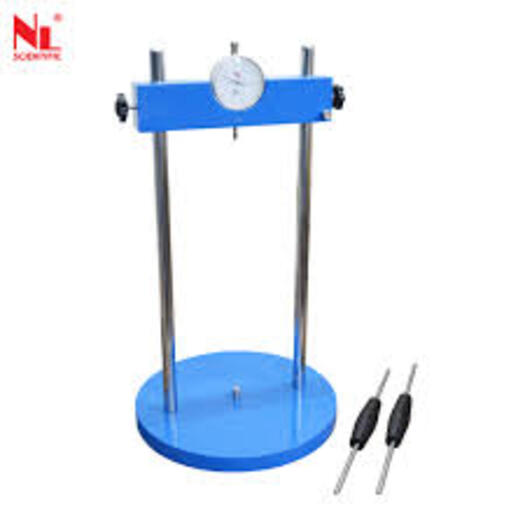
The Length Comparator with Gauge is a precision laboratory instrument used for measuring the length change (expansion or shrinkage) of cement mortar, concrete, and other construction material specimens. It is widely used in construction material testing laboratories to assess the dimensional stability and durability of cement-based products.
This apparatus consists of a rigid frame fitted with a high-accuracy dial gauge or digital gauge, which measures minute changes in specimen length with high precision. It is designed to provide reliable and repeatable readings during long-term testing of specimens.
Manufactured using robust and corrosion-resistant materials, the Length Comparator ensures stability, accuracy, and long service life. It is suitable for routine laboratory testing as well as advanced research applications in civil engineering.
Key Features:
- High-precision dial/digital gauge for accurate readings
- Rigid and stable frame construction
- Measures minute expansion and shrinkage changes
- Corrosion-resistant and durable body
- Easy setup and operation
- Suitable for long-duration testing
Applications:
- Cement and mortar testing laboratories
- Civil engineering research institutes
- Construction material quality control departments
- Infrastructure development projects
- Academic and training laboratories
Working Principle:
The comparator measures the change in length of a test specimen over time using a high-sensitivity gauge system. Any expansion or shrinkage is recorded to evaluate the dimensional stability of the material.
Precision Measurement for Laboratory TestingThis length comparator excels at providing highly accurate measurements with its dial gauge, ensuring readings down to 0.001 mm. Designed for use with cement, mortar, and concrete specimens, it is essential for laboratories conducting compliance and quality assessments.
Robust Build and Reliable AlignmentEngineered with a heavy-duty cast iron frame and powder-coated finish, the instrument withstands rigorous laboratory conditions. Fine knurled screws and adjustable specimen supports ensure secure alignment and repeatable measurements every time.
Manual Operation, No Power NeededOperated entirely by hand with a manual lever and precise dial gauge, this length comparator eliminates the need for a power supply. Its rapid response and instant measurement capability make it reliable for time-sensitive tests.
FAQ's of Length Comparator With Gauge:
Q: How do I properly use the Length Comparator with Dial Gauge for specimen measurement?
A: Begin by placing the specimen on the adjustable shelf with the V-grooved anvil. Use the fine knurled screws to align the sample precisely between the hardened stainless steel contact points. Operate the manual lever to bring the contact point into position, and read the change in length directly from the dial gauge.
Q: What types of specimens can be tested with this comparator?
A: This device is designed primarily for cement, mortar, and concrete specimens up to 250 mm in length. Custom-sized supports for other specimen dimensions are available upon request, making it versatile for a range of laboratory samples.
Q: When should calibration be performed on the comparator?
A: Calibration is recommended before initial use, and periodically depending on frequency of testing and laboratory protocols. The included calibration bar and instruction manual provide step-by-step guidance for maintaining measurement accuracy.
Q: Where should the length comparator be installed for optimal use?
A: Install the unit on a stable, level benchtop in a controlled laboratory environment, ideally within the specified temperature (20C 2C) and humidity (40%-70% RH) ranges for reliable and accurate readings.
Q: What is the process for adjusting specimen alignment on this device?
A: The fine knurled screws allow for incremental adjustment of the specimen position. This ensures that specimens are properly centered and aligned with the measuring axis, minimizing measurement errors and enhancing repeatability.
Q: What are the benefits of using a length comparator with a dial gauge?
A: The main benefits include high measurement accuracy (0.01 mm), immediate response with mechanical display, straightforward manual operation, and robust construction. These features help ensure precise assessments of length changes in laboratory samples.
Q: How does the comparator comply with standard testing requirements?
A: This instrument adheres to IS: 9459 and is compatible with ASTM C490 standards for length change measurements, ensuring valid and recognized results in laboratory testing applications.

 Send Inquiry




 Send Inquiry


 Send Inquiry