Blaines Air Permeability Apparatus About
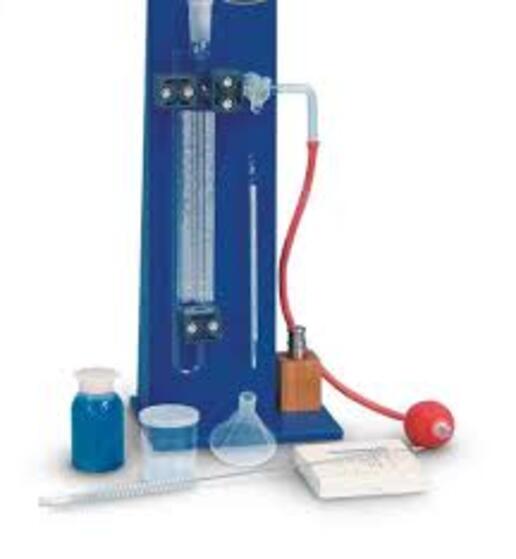
The Blaines Air Permeability Apparatus is a precision laboratory instrument used for determining the fineness of cement in terms of specific surface area. It is widely used in cement plants, construction material testing laboratories, and quality control departments to ensure consistent cement performance.
The apparatus operates on the air permeability principle, where the resistance offered by a compacted cement sample to the flow of air is measured. This resistance is then used to calculate the specific surface area (fineness) of cement, which directly affects strength, setting time, and workability.
The system includes a permeability cell, manometer, rubber aspirator, and accessories, all designed for accurate and repeatable testing. Manufactured using high-quality materials, the apparatus ensures durability, precision, and long service life in laboratory environments.
Key Features:
- Based on standard Blaine air permeability method
- High accuracy measurement of cement fineness
- Sturdy and vibration-free construction
- Easy-to-operate laboratory setup
- Durable glass and metal components
- Suitable for routine and research testing
Applications:
- Cement manufacturing industries
- Construction material testing laboratories
- Civil engineering research institutions
- Quality control departments
- R&D laboratories in building materials
Working Principle:
The apparatus measures the rate of air flow through a compacted cement bed. The resistance to airflow is used to determine the specific surface area, indicating the fineness of the cement sample.
Reliable Cement Fineness TestingDesigned specifically for determining the air permeability of cement and fine powders, the Blaine Type Air Permeability Apparatus ensures precise results. The manual operation allows for direct interaction and control, while the provided accessories streamline the setup process for laboratory professionals. Its compliance with major global standards supports broad usage and trustworthy outcomes in cement analysis.
User-Friendly and Easy MaintenanceWith a glass body for clear visibility and a robust metal stand, this apparatus is as user-friendly as it is durable. Routine maintenance simply involves disassembling and cleaning the components with a soft brush and mild detergent. The analog manometer and supplied calibration standard guarantee ease of use and sustained accuracy for repeated testing.
Complete Set for Laboratory EfficiencyThe apparatus comes as a complete kit, including a permeability cell, manometer, aspirator bulb, filter paper, non-porous disc, V-shaped funnel, weight balance, and cleaning brush. Its compact and portable design makes it suitable for laboratories of all sizes, while the export-worthy packaging ensures safe delivery and storage. Each test requires only a small sample, making it efficient and economical.
FAQ's of Blaines Air Permeability Apparatus:
Q: How does the Blaine Type Air Permeability Apparatus measure cement fineness?
A: The device measures the fineness of cement by determining its air permeability. Cement powder is packed into the permeability cell, and air is drawn through the sample using an aspirator bulb. The resistance encountered indicates the specific surface area (cm2/g), which is then read from the analog manometer.
Q: What are the recommended cleaning and maintenance procedures?
A: After each use, the apparatus should be disassembled and cleaned using the provided soft brush and mild detergent. All glass and metal components should be rinsed and air-dried to prevent residue buildup and ensure consistent performance in subsequent tests.
Q: When should the calibration standard be used?
A: The supplied reference standard should be used before initial operation and periodically thereafter to verify and maintain the accuracy of the instrument. Calibration ensures conformity with IS 4031 (Part 2), ASTM C204, and EN 196-6 requirements.
Q: Where is this apparatus typically used?
A: This apparatus is primarily used in cement and material testing laboratories for quality control and research purposes. Its bench-top, portable design makes it suitable for both small and large laboratory environments.
Q: What sample size and test parameters are required?
A: Each test requires 4-5 grams of material, formed into a specimen measuring 40 mm in diameter and 50 mm in height. The Blaines apparatus can test permeability in the range of 150-7000 cm2/g with an accuracy of 1% and a resolution of 1 cm2/g.
Q: What is the main benefit of using this apparatus for cement testing?
A: The main benefit is its ability to deliver fast, reliable, and accurate measurements of cement fineness without the need for external power. Its manual operation and complete accessory kit facilitate ease of use and consistent quality checks.

 Send Inquiry




 Send Inquiry


 Send Inquiry