Copper Strip Corrosion Test Apparatus About
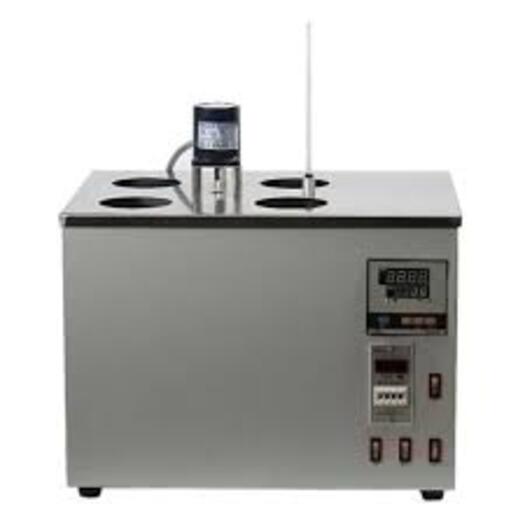
The Copper Strip Corrosion Test Apparatus is a precision laboratory instrument used to determine the corrosiveness of petroleum products, lubricants, and other hydrocarbon solvents on copper. It is designed in compliance with international testing standards such as ASTM D130 and IP 154, ensuring accurate and reliable evaluation of corrosive properties.
This apparatus facilitates controlled heating of the test sample along with a polished copper strip, allowing observation of discoloration or corrosion effects after a specified test period. It is widely used in petroleum refineries, chemical industries, research laboratories, and quality control departments.
Key Features
- Conforms to ASTM D130 / IP 154 standards
- Uniform temperature control for consistent testing
- Durable stainless steel bath with corrosion resistance
- Digital temperature controller for precise operation
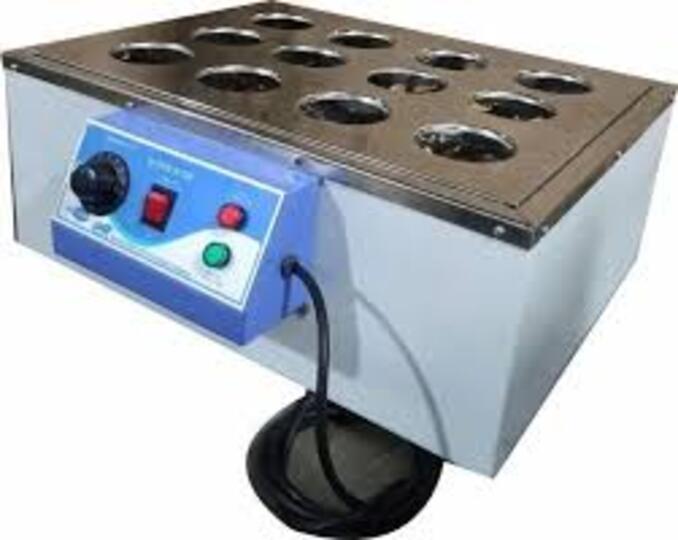
- Multiple test positions (optional)
- Easy handling and maintenance
Applications
- Petroleum product testing
- Lubricating oil analysis
- Chemical and solvent industries
- Quality control laboratories
Technical Specifications (Typical)
- Temperature Range: Ambient to 100C (or as per test requirement)
- Temperature Control: Digital PID controller
- Bath Medium: Water / Oil bath
- Test Capacity: Single or multiple samples
- Construction: Stainless steel / powder-coated body
- Power Supply: 220240V AC, 50 Hz
Advantages
- Accurate and repeatable corrosion analysis
- Reliable performance as per global standards
- Compact design with robust construction
- Suitable for routine and research testing
Safety Note
Ensure proper handling of heated samples and chemicals. Follow standard laboratory safety procedures and use protective equipment while conducting tests.
Precision and ComplianceOur Copper Strip Corrosion Test Apparatus offers exact temperature control with an accuracy of 1C and a resolution of 0.1C, ensuring reliable test results. Conforming strictly to ASTM D130 and IS 1448 P-15, it facilitates standardized petroleum product assessments, making it indispensable in quality assurance laboratories and research facilities.
Robust Construction and User SafetyCrafted with a stainless steel bath and double-wall insulation, the unit is designed for durability and operational safety. The overtemperature cut-off mechanism, indicator lamp, and insulated body guard against overheating, while the observation window allows live monitoring of the test process without exposure to hazards.
Versatile Testing CapabilitiesCapable of testing up to four specimens simultaneously, this apparatus is suitable for routine batch testing and special investigations. Manual agitation, adjustable up to 40 cycles per minute, allows users to tailor each test according to standard specifications, ensuring accurate and reproducible results across a range of petroleum samples.
FAQ's of Copper Strip Corrosion Test Apparatus:
Q: How does the Copper Strip Corrosion Test Apparatus operate?
A: The apparatus uses a stainless steel bath, heated by an immersion electrical heater, to bring test samples in contact with copper strips under controlled conditions. Manual agitation at 30-40 cycles per minute ensures compliance with ASTM D130/IS 1448 P-15, and a digital controller precisely monitors temperatures from ambient to 150C.
Q: What is the process for conducting a copper strip corrosion test using this equipment?
A: To perform the test, place up to four copper strips in the supplied test tube holder, add the petroleum sample, and immerse the tubes in the preheated bath. Manually agitate as per standard protocols, then observe corrosion effects through the heat-resistant glass window, assessing results visually against the corrosion rating scale.
Q: When should the Copper Strip Corrosion Test Apparatus be used?
A: This equipment is ideal for routine laboratory analysis whenever it is necessary to evaluate the corrosiveness of petroleum products, such as lubricants, fuels, or oils, as part of quality control, product development, or investigative assessments.
Q: Where is this apparatus best utilized?
A: The device is intended for use in indoor laboratory environments, preferably on a bench-top. Its compact dimensions and built-in safety features make it suitable for research institutes, petroleum testing labs, and industrial quality assurance settings.
Q: What benefits does the digital temperature controller offer?
A: The digital temperature controller allows for precise regulation of the bath temperature, offers a clear digital readout, and ensures quick response to temperature changes-guaranteeing reliable test conditions, reducing human error, and maintaining consistent accuracy.
Q: How is specimen agitation managed during the test?
A: Agitation is performed manually, with the operator moving the specimen holder at a prescribed rate of 30 to 40 cycles per minute, as per international testing standards. This ensures uniform sample exposure and reproducible test results.
Q: What are the main safety features of this test apparatus?
A: Key safety components include an overtemperature cut-off to prevent overheating, a clearly visible indicator lamp for operation status, robust thermal insulation, and an observation window made of heat-resistant glass to reduce direct exposure risk during testing.

 Send Inquiry



 Send Inquiry


 Send Inquiry