Softening Point Apparatus About
The Softening Point Apparatus is a precision laboratory instrument used to determine the softening point of bitumen, asphalt, pitch, and other thermoplastic materials. It operates on the Ring and Ball method, ensuring accurate and repeatable test results as per standard testing procedures.
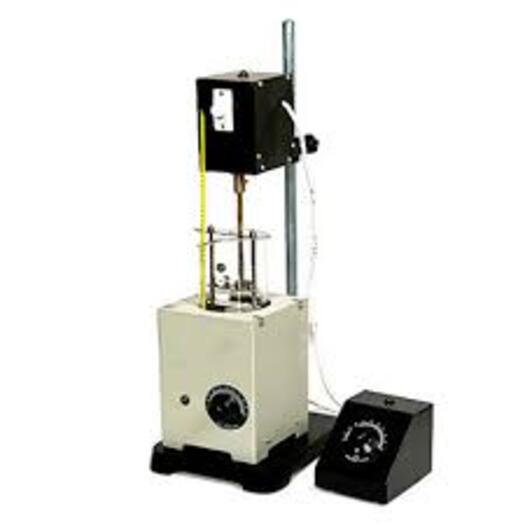
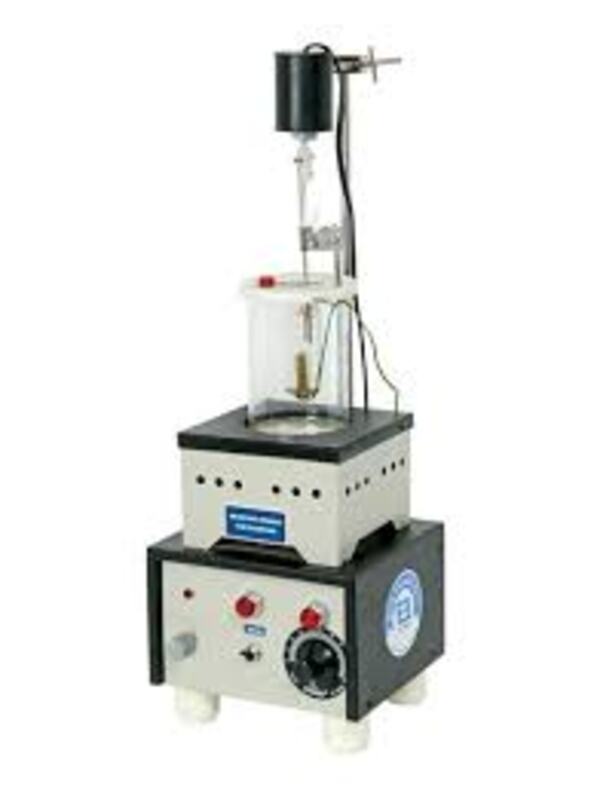
The apparatus typically consists of a brass ring, steel balls, ball guides, a heating bath (glass beaker), and a temperature control system. The sample is heated at a controlled rate, and the temperature at which the material softens enough to allow the steel ball to fall a specified distance is recorded as the softening point.
This equipment is widely used in civil engineering laboratories, road construction testing, and quality control labs to evaluate material performance under temperature variations.
Key Features
- Conforms to standards like ASTM D36 and IS 1205
- Durable and corrosion-resistant construction
- Uniform heating with precise temperature control
- Easy-to-use design with accurate measurement
- Suitable for bitumen, tar, and related materials
Applications
- Road construction and maintenance
- Bitumen quality testing laboratories
- Research and educational institutes
- Petrochemical industries
Optional Variants
- Manual Softening Point Apparatus
- Digital Softening Point Apparatus with PID controller
Robust Design and ConstructionCrafted with stainless steel and heat resistant glass, this apparatus offers longevity and durability under rigorous laboratory conditions. Its bench-top mounting type makes it stable for consistent and repeatable results, while the metallic silver finish enhances its professional laboratory appearance.
Precise and Versatile MeasurementsCovering a wide measuring range of 30C to 200C, the apparatus features an accurate (0.5C) glass analogue thermometer, ensuring precise detection of softening points. The equipment accommodates two standard bitumen test rings, allowing simultaneous testing and improved workflow efficiency.
Comprehensive Accessories for Easy OperationSupplied with 2 brass rings, 2 steel balls, ball guides, a support frame, and a 600 ml beaker, the apparatus is fully equipped for immediate use. The inclusion of both spirit lamp and optional electrical heating offers flexibility and adaptability for diverse testing environments.
FAQ's of Softening Point Apparatus:
Q: How does the Softening Point Apparatus work?
A: The apparatus heats the sample (bitumen, asphalt, tar, or resin) in a beaker filled with water or glycerol, using a spirit lamp or optional electrical heater. A thermometer monitors the temperature, and the softening point is determined when steel balls, placed atop sample rings, drop as the sample softens, following IS:1205 & ASTM D36 protocols.
Q: What is included with the Softening Point Apparatus?
A: Along with the main unit, you receive 2 brass rings, 2 steel balls, ball guides, a support frame, a 600 ml beaker, and a 0C to 200C glass thermometer, providing everything needed for standard softening point tests.
Q: When should I use this apparatus in my laboratory?
A: Use this apparatus whenever you need to determine the softening point of bitumen, asphalt, tar, or resins, as required by specifications for construction material testing, research, or quality control purposes.
Q: Where is the Softening Point Apparatus typically used?
A: This equipment is designed for laboratory usage and is commonly utilized by manufacturers, service providers, suppliers, traders, and researchers involved in the quality assessment of bituminous and similar materials.
Q: What benefits does manual operation offer for this test?
A: Manual operation enables precise control during the heating process and close attention to changes, helping ensure accurate, repeatable results and straightforward maintenance without complex automation.
Q: How many samples can I test at once and what sizes are supported?
A: The apparatus allows for simultaneous testing of 2 samples using standard bitumen test rings, increasing efficiency and saving valuable laboratory time.
Q: What is the recommended process for conducting a softening point test?
A: Place the sample-filled rings atop the supports in the beaker, set the steel balls on top, heat the medium gradually using the preferred heating method, and record the temperature when the balls pass through the softened samples, following the prescribed standard procedures.

 Send Inquiry



 Send Inquiry


 Send Inquiry