About Hot Plates
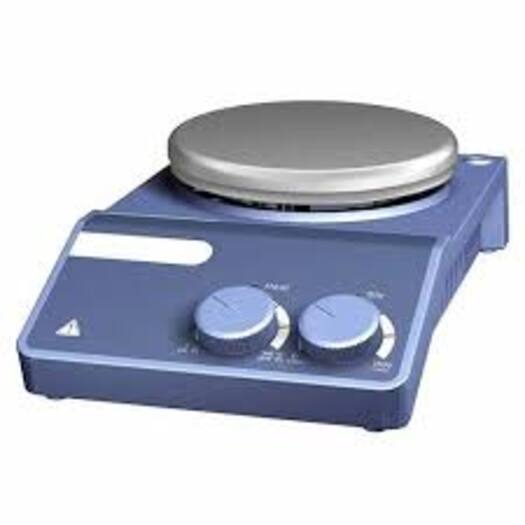
A Laboratory Hot Plate is a high-precision heating device used in laboratories for controlled heating of liquids, chemicals, and samples without the use of an open flame. It provides a flat, uniformly heated surface that ensures safe, consistent, and efficient thermal processing in scientific and industrial applications.
Designed with durable construction and accurate temperature control, laboratory hot plates are widely used in chemistry labs, pharmaceutical industries, research centers, and educational institutions.
Key Features
- Temperature range: Ambient to 300550C (model dependent)
- Uniform heat distribution for accurate results
- Cast iron / stainless steel / ceramic top surface options
- Digital or analog temperature control system
- Heavy-duty heating element for stable performance
- Overheat protection and safety indicator lamp
- Compact, corrosion-resistant, and easy to clean design
Working Principle
The hot plate works on the principle of electrical resistance heating, where an electric current passes through a heating element to generate heat. This heat is transferred to the metal or ceramic surface and then to the vessel placed on it, ensuring uniform and controlled heating.
Applications
- Heating chemical solutions and reagents
- Sample preparation and digestion
- Boiling and evaporation processes
- Pharmaceutical formulation and testing
- Biological and microbiological research
- Educational laboratory experiments
Types Available
- Round Hot Plate
- Rectangular Hot Plate
- Digital Hot Plate with PID controller
- Hot Plate with Magnetic Stirrer
- Heavy-duty Industrial Laboratory Hot Plate
Advantages
- Safe alternative to open flame heating
- Provides stable and uniform temperature
- Suitable for long-duration experiments
- Easy operation and low maintenance
- Widely used in research and quality control labs
Engineered for Safety and EfficiencySafety is a core feature, with integrated thermal fuses, overheat protection, and a clear LED/Lamp power indicator. The body is designed to resist corrosion and the insulation with high-temperature ceramic fibers ensures minimal heat loss, making these hot plates energy efficient and suitable for prolonged laboratory or industrial use.
Designed for Versatile Laboratory UseThese bench-top electric hot plates handle heating, drying, and a variety of laboratory experiments. With both analog and digital display options, precise thermostatic temperature control and fast response times, users can reliably heat samples up to 300mm in diameter. Their manual or thermostatic control mode ensures compatibility with different experimental needs.
Built for Lasting PerformanceWith robust construction from cast iron or stainless steel and protective finishes, these hot plates are made to withstand harsh environments found in research, industrial, and educational settings. Their ability to operate from 0C to 350C, coupled with ISI certification, ensures consistent, accurate, and safe operation for years to come.
FAQ's of Hot Plates:
Q: How do I operate the hot plate and adjust its temperature?
A: Simply plug the hot plate into a standard 220-240V AC outlet using the 3-pin plug. You can manually set the desired temperature using the analog or optional digital controller, which provides precise adjustment within the 0C to 350C range. The system responds in less than two minutes to reach the set temperature.
Q: What safety features are included in these hot plates?
A: Safety features include a built-in thermal fuse and overheat protection to automatically cut off power in case of excess temperature. An LED or lamp power indicator provides visible operation status, while the corrosion-resistant, insulated body prevents accidental burns and ensures safe long-term use.
Q: Where can these hot plates be used?
A: These hot plates are ideal for laboratories, industrial environments, and educational institutions throughout India. Their bench-top design makes them suitable for any standard workspace requiring efficient heating solutions for experiments, sample drying, or other laboratory applications.
Q: What is the benefit of using cast iron or stainless steel plates?
A: Cast iron and stainless steel plates provide excellent heat retention and uniform distribution. Their powder-coated or polished surface resists corrosion, ensuring durability and consistent performance during repeated laboratory or industrial use.
Q: When should I use the thermostatic temperature control mode?
A: Thermostatic temperature control is recommended for tasks requiring precise and consistent temperatures over extended periods. This function automatically maintains the set temperature, which is essential for reproducible experimental results.
Q: How accurate and energy efficient is this equipment?
A: The hot plate offers a temperature accuracy of 5C and a resolution of 1C, ensuring precise control. High-temp ceramic fiber insulation minimizes heat loss, and the unit is designed for energy efficiency, helping to reduce laboratory operating costs.
Q: What processes can be performed using this hot plate?
A: These hot plates are versatile, supporting heating, drying, boiling, and laboratory experiments requiring controlled surface temperatures. Depending on the plate size, they can accommodate single or multiple specimens up to 300mm in diameter.

 Send Inquiry



 Send Inquiry


 Send Inquiry