Humidity Test Chamber About
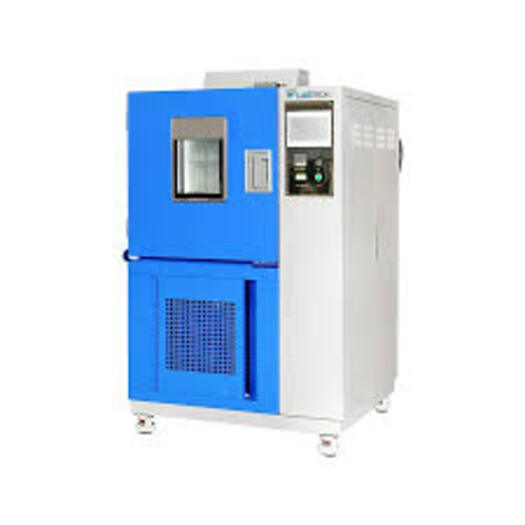
A humidity test chamber is an enclosed, insulated cabinet designed to maintain precise levels of temperature and relative humidity over a set period. It allows researchers and manufacturers to evaluate how products perform under different environmental conditions such as high moisture, dry air, or cyclic humidity changes.
Key Features
- Temperature control: Typically ranges from about 10C to 80C (or wider in advanced models).
- Humidity control: Usually from 20% to 95% relative humidity (RH).
- Digital controller: Allows setting and monitoring of test parameters.
- Humidification system: Adds moisture using water reservoirs or steam generators.
- Dehumidification system: Removes excess moisture to maintain desired RH levels.
- Air circulation: Ensures uniform temperature and humidity throughout the chamber.
- Viewing window: Lets users observe samples without opening the chamber.
Working Principle
The chamber works by combining heating, cooling, humidification, and dehumidification systems:
- Water is heated or atomized to increase humidity.
- Cooling coils or desiccants reduce humidity when needed.
- Sensors continuously monitor temperature and RH, and a controller adjusts systems to maintain set conditions.
Uses
- Material testing: Metals, plastics, textiles, and coatings
- Electronics testing: Checking performance under moisture exposure
- Pharmaceutical stability studies
- Food storage and shelf-life testing
- Packaging evaluation
Types
- Constant humidity chamber: Maintains fixed temperature and RH
- Cyclic (programmable) chamber: Simulates changing environmental conditions
- Environmental test chamber: Combines humidity, temperature, and sometimes vibration or light
Robust Construction and Premium MaterialsFeaturing a SUS304 stainless steel inner chamber for superior corrosion resistance and a powder coated mild steel exterior, this humidity test chamber is designed for durability even in challenging test environments. High-density polyurethane insulation ensures excellent temperature and humidity stability, while a tightly sealed door with an observation window provides easy visual monitoring.
Advanced Control and Safety SystemsThe programmable microprocessor-based controller, digital touchscreen, and PID-controlled SSR heater guarantee precise environmental settings and rapid response times. Over-temperature protection, leakage breaker, and automatic water supply deliver robust safety and user convenience. The chamber meets modern laboratory standards for accuracy, automation, and reliability.
Flexible Applications and User ConvenienceSuitable for testing up to 20 specimens with customized sizing, the chamber accommodates varied material types and test requirements. Internal LED illumination, heavy-duty lockable caster wheels, and extensive test range make it versatile for diverse sectors like manufacturing, R&D, and quality control in India and beyond.
FAQ's of Humidity Test Chamber:
Q: How does the humidity and temperature control system work in this chamber?
A: This chamber uses a programmable microprocessor-based controller with a digital touchscreen for setting humidity and temperature ranges from 30%-98% RH and -20C to +100C. The SSR heater with PID control manages heating precisely, while humidity is generated via a steam humidification system, all closely monitored for accurate results.
Q: What safety features are provided to protect users and specimens during testing?
A: Key safety devices include over-temperature protection, a leakage breaker, and safety alarms. The chamber's door is tightly sealed to prevent leaks, while the internal construction and overheat protection minimize risks to both users and tested specimens.
Q: When should I use the automatic versus manual water supply method?
A: The automatic water supply is ideal for routine, unattended operations, ensuring consistent humidity levels. Manual filling is useful during setup, maintenance, or when precise control of water input is needed for specific tests or troubleshooting.
Q: Where is the Humidity Test Chamber typically installed, and how portable is it?
A: This chamber is floor-mounted and equipped with heavy-duty lockable caster wheels, making it suitable for laboratories, quality control rooms, and R&D centers. The wheels allow for easy relocation within your facility as needed.
Q: What are the main benefits of using this humidity test chamber?
A: The main benefits include stable and accurate environmental control, rapid setting adjustment (within 5 minutes), corrosion-resistant materials, automated safety and operation features, and flexibility for up to 20 customized specimens. This ensures reliable, reproducible testing and higher productivity.
Q: How is specimen testing conducted inside the chamber?
A: Specimens are placed inside the chamber on adjustable shelves or holders, sized according to your requirements. After setting the desired humidity and temperature, the controller maintains the environment throughout the test duration, and you can visually monitor progress via the observation window.
Q: What industrial or research applications can this chamber support?
A: The chamber is used extensively in environmental testing, humidity and temperature resistance testing, product research, quality assurance, and material development. Typical users include electronics, automotive, pharmaceutical, and materials manufacturers, as well as independent testing labs in India.

 Send Inquiry




 Send Inquiry


 Send Inquiry