J Ring For Self Compacting Concrete About
A J Ring Apparatus is a specialized testing tool used to evaluate the passing ability and flow characteristics of self-compacting concrete (SCC). It is used in conjunction with the slump flow test to assess how well concrete can flow through obstructions such as reinforcement bars without segregation or blockage.
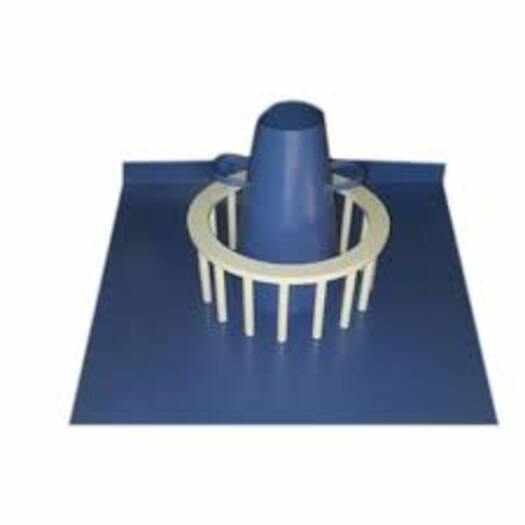
The apparatus consists of a circular ring fitted with vertical steel rods that simulate reinforcement, allowing accurate analysis of concrete performance in real construction conditions.
Key Features
- Designed for SCC passing ability testing
- Durable and robust steel construction
- Precisely spaced vertical rods for accurate simulation
- Corrosion-resistant finish
- Easy to handle, use, and maintain
- Compatible with standard slump cone tests
Technical Specifications (Typical)
- Material: Mild Steel / Stainless Steel
- Shape: Circular ring with vertical rods
- Rod Diameter: As per standard specifications
- Rod Spacing: Standard uniform spacing
- Finish: Powder-coated / Painted
- Usage: Manual operation
Applications
- Testing self-compacting concrete (SCC)
- Construction quality control labs
- Research and development centers
- Civil engineering laboratories
- On-site testing at construction projects
Advantages
- Evaluates passing ability of SCC accurately
- Helps detect blocking and segregation issues
- Ensures proper concrete mix design
- Simple and reliable testing method
- Improves quality and performance of concrete
Additional Information
The J Ring for Self Compacting Concrete is an essential testing accessory used alongside slump flow tests to ensure that SCC can pass through congested reinforcement areas. It plays a key role in achieving high-quality, defect-free concrete structures.
Accurate Testing of SCC Passing AbilityThe J Ring is essential for evaluating the workability and passing ability of self-compacting concrete. Its robust construction and precise design ensure accurate, repeatable results, making it a trusted tool in the concrete testing industry. Combined with a standard slump cone, it helps confirm the concrete's consistency and homogeneity.
Durable and Easy to Clean DesignBuilt with galvanized iron or stainless steel, this J Ring is engineered to resist corrosion and maintain smooth finishes even after repeated use. Maintenance requirements are minimal-simply wipe the equipment clean after each test, ensuring both longevity and reliability in daily laboratory operations.
Simple and Efficient Manual OperationWith a manual, operator-driven mechanism, the J Ring allows immediate response upon concrete placement. There's no complex set-up required-mount it on a flat, horizontal surface and begin testing. Removable rods and clear visual/manual scale indicators streamline the assessment process for concrete specialists.
FAQ's of J Ring For Self Compacting Concrete:
Q: How is the J Ring used to test self-compacting concrete?
A: The J Ring is placed on a horizontal surface around a standard slump cone. After filling the cone with SCC and lifting it, the flow and passing ability of the concrete are visually assessed as it moves past the evenly spaced rods.
Q: What benefits does the J Ring provide during SCC testing?
A: The J Ring reliably measures the passing ability and consistency of SCC, helping identify potential segregation or blockages in the mix. Its rust-resistant, removable rods also allow for repeated, convenient use with minimal maintenance.
Q: When should laboratories use the J Ring test?
A: Laboratories and quality control teams should use the J Ring test whenever verifying the workability and homogeneity of self-compacting concrete is needed, particularly before onsite placement in reinforced or congested formworks.
Q: Where is the ideal environment to operate the J Ring?
A: Operate the J Ring in standard laboratory conditions, as per IS:456 requirements. It performs optimally on a level, horizontal surface at ambient temperatures with standard humidity.
Q: What process should be followed for cleaning and maintaining the J Ring?
A: After each test, wipe all surfaces of the J Ring, including rods and the ring base, with a cloth to remove concrete residues. Its corrosion-resistant construction ensures long-term use with minimal effort.
Q: Can the J Ring be used with any slump cone?
A: The J Ring is designed to be compatible with a standard slump cone, which can be purchased separately. Ensure the slump cone matches standard SCC test requirements for accurate assessment.
Q: What are the specifications of the rods in the J Ring apparatus?
A: There are 16 rods, each with an 18 mm diameter and a height of 100 mm, evenly spaced and either welded or coupled to the circular ring base for consistent test results.

 Send Inquiry



 Send Inquiry


 Send Inquiry