Lateral Extensometer For Concrete About
Lateral Extensometer for Concrete is a precision testing instrument used to measure lateral (transverse) deformation or strain in concrete specimens during compression or load testing. It is widely used in material testing laboratories, research institutions, and civil engineering applications to evaluate the elastic and deformation behavior of concrete under stress.
The instrument is designed for accurate and reliable measurement of expansion or contraction in concrete samples, helping engineers and researchers analyze structural performance, Poissons ratio, and material characteristics.
Features:
- High precision measurement of lateral strain
- Robust and lightweight construction
- Easy to mount on concrete specimens
- Compatible with compression testing machines
- Accurate and repeatable readings
- Corrosion-resistant components
- Low maintenance design
Applications:
- Concrete material testing laboratories
- Civil engineering research
- Quality control in construction industry
- Determination of Poissons ratio
- Structural behavior analysis
Specifications:
- Type: Mechanical/Digital (as required)
- Material: High-grade alloy steel / aluminum components
- Usage: Lateral strain measurement in concrete
- Compatibility: Compression testing machines
- Accuracy: High precision measurement system
Custom designs and measurement ranges are available as per client requirements
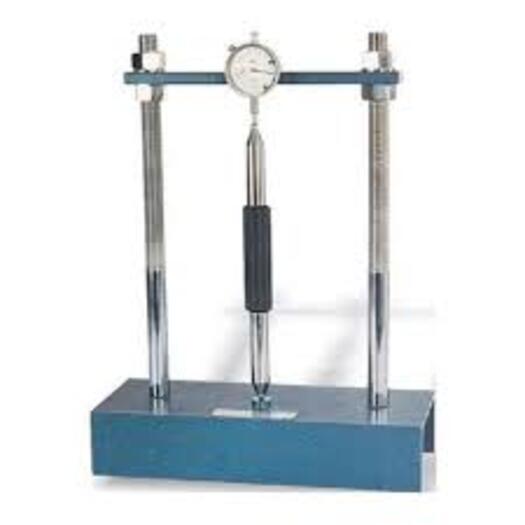
Precise Measurement for Concrete TestingEngineered for high-accuracy results, this extensometer uses a dial indicator with a 0.01 mm resolution to measure the lateral expansion of concrete cylinders during compression. Its robust build and advanced contact points ensure stable, repeatable readings, which are crucial for structural testing and research in civil engineering laboratories.
Durable Construction for Laboratory UseBuilt from mild steel with chrome plating and a corrosion-resistant, powder-coated finish, this extensometer stands up to demanding laboratory conditions. The hardened steel knife edges and spring-loading system enable secure, consistent clamping on specimens, optimizing reliability over prolonged use in material testing environments.
FAQ's of Lateral Extensometer For Concrete:
Q: How is the Lateral Extensometer for Concrete installed on a specimen?
A: The extensometer is mounted onto the cylindrical concrete specimen using a clamp-type mechanism with hardened steel knife edge contact points. The spring-loading system ensures a stable and secure attachment during testing.
Q: What types of specimens can be measured with this extensometer?
A: It is specifically designed for standard concrete cylinders up to 150 mm in diameter and 300 mm in length, accommodating single specimens during compression testing.
Q: When should I use this device during the testing process?
A: You should attach the extensometer before initiating the compression test, ensuring that it is properly secured and aligned to accurately track lateral movement as the specimen is loaded.
Q: Where is this extensometer best utilized?
A: This instrument is ideal for material testing laboratories, particularly those focused on civil engineering and concrete strength evaluation, where precise measurement of lateral deformation is essential.
Q: What is the benefit of using a dial gauge with 0.01 mm resolution?
A: The high-resolution dial gauge provides precise, immediate readings of lateral extension, enhancing the accuracy of test results and supporting rigorous quality control or research requirements.
Q: How does the manual control mode enhance testing?
A: Manual control ensures the user can carefully apply and monitor the extensometer, allowing for responsive adjustments and precise data collection without the need for powered systems.

 Send Inquiry




 Send Inquiry


 Send Inquiry