Ring And Ball Apparatus About
The Ring and Ball Apparatus is a fundamental physics laboratory instrument used to demonstrate the principle of thermal expansion of solids. It is widely used in schools, colleges, and research laboratories for educational and experimental purposes.
This apparatus consists of a precisely machined brass ball and matching brass ring, mounted on insulated handles. At room temperature, the ball passes easily through the ring. When the ball is heated, it expands and no longer fits through the ring, clearly illustrating the effect of heat on the dimensions of solids.
Key Features
- Made from high-quality brass for durability and long service life
- Smooth finish for accurate demonstration
- Wooden or insulated handles for safe handling during heating
- Compact and easy-to-use design
- Ideal for classroom demonstrations and laboratory experiments
Specifications
- Material: Brass (ball and ring)
- Ball Diameter: Approx. 1822 mm
- Mounting: Handle-mounted or chain-supported
- Application: Physics lab / thermal expansion demonstration
Applications
- Demonstration of thermal expansion and contraction
- Physics experiments in schools and colleges
- Educational science kits and laboratory use
Working Principle
When heated, metals expand due to increased molecular motion. In this apparatus, the heated ball expands and cannot pass through the ring, whereas it fits perfectly when cooleddemonstrating the concept of expansion clearly and effectively.
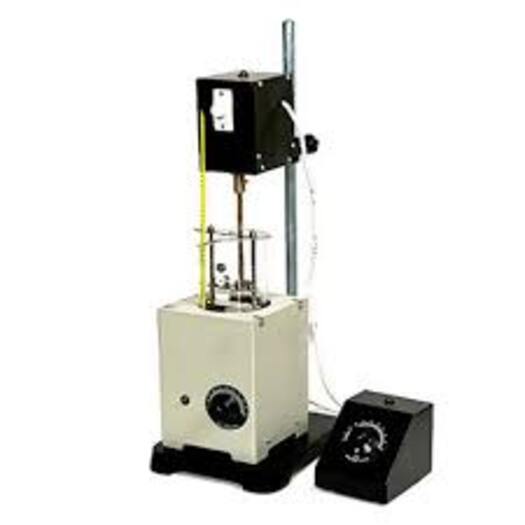
Accurate and Reliable Softening Point TestingDesigned for laboratory professionals, the Ring and Ball Apparatus ensures precise measurement of the softening point of bituminous materials. Each component-from the corrosion-resistant brass rings to the removable ball guides-supports accuracy and repeatability. The included 600 ml heat-resistant glass beaker and thermometer allow testing within a wide temperature range (up to 110C), accommodating various sample requirements.
Effortless Manual Operation and SetupThis apparatus is straightforward to assemble and does not require an external power supply, making it highly convenient and portable. With its manual control mode, operators gain hands-on control over each stage of the test. The kit comes complete with a user manual, ensuring easy reference during initial setup and regular usage. The robust tabletop design promotes stability and durability during laboratory procedures.
Comprehensive Package for Laboratory UseSupplied with all necessary accessories-including two steel balls, brass rings, beaker, guide, support frame, and thermometer holder-the Ring and Ball Apparatus offers a comprehensive solution. Its standardized ring and specimen sizes meet laboratory test requirements. The entire assembly weighs approximately 2.5 kg and fits seamlessly into most laboratory environments.
FAQ's of Ring And Ball Apparatus:
Q: How is the Ring and Ball Apparatus used to determine the softening point of bituminous materials?
A: The apparatus measures the temperature at which a bitumen sample softens enough for a steel ball to fall through the specimen within a brass ring. Operators heat the assembly manually, monitor temperatures using the included thermometer, and record the softening point when the ball passes through the ring.
Q: What materials are included with the Ring and Ball Apparatus?
A: Each set includes brass rings, two steel balls (9.53 mm diameter), a 600 ml heat-resistant glass beaker, removable ball guides, a thermometer (range 0C to 110C), a support frame, and a thermometer holder. All accessories and a user manual are provided for complete setup.
Q: When should this apparatus be used in a laboratory setting?
A: The Ring and Ball Apparatus should be used whenever accurate measurement of the softening point of bitumen or similar materials is required, typically during standard material property testing in quality control or research labs.
Q: Where is the Ring and Ball Apparatus commonly utilized?
A: This device is most commonly used in materials testing laboratories, educational institutions, and quality assurance facilities, particularly by professionals working with asphalt, bitumen, and other road construction materials.
Q: What is the process for assembling and operating the apparatus?
A: Assembly involves placing the brass rings in the support frame, positioning the steel balls using the removable guides, pouring the sample and liquid medium into the beaker, and inserting the thermometer. The operation is fully manual and guided by the included user manual.
Q: What are the benefits of using this manual testing apparatus?
A: Benefits include precise measurement (accuracy of 0.5C), ease of use without requiring a power supply, robust construction with corrosion-resistant materials, and the ability to test two specimens simultaneously. Its portability and comprehensive accessory package enhance convenience.

 Send Inquiry



 Send Inquiry


 Send Inquiry