Ordinary Rain Gauge About
Ordinary Rain Gauge Description
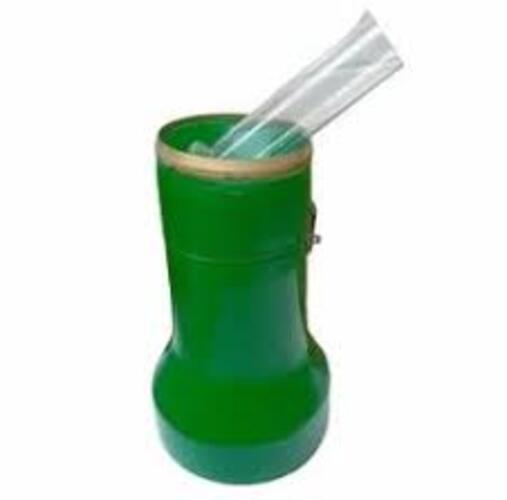
The Ordinary Rain Gauge is a simple meteorological instrument used to measure the amount of rainfall at a specific location over a given period of time. It collects rainwater through a funnel and stores it in a measuring cylinder for accurate reading.
The instrument works on a basic collection and measurement principle, where the rainfall is directly measured in millimeters using a graduated container. It is widely used for daily rainfall monitoring in weather stations and field observations.
Made from durable and weather-resistant materials, the rain gauge ensures reliable performance under outdoor conditions. It is easy to install, simple to use, and requires very low maintenance.
Features
- Simple and accurate rainfall measurement
- Easy to install and operate
- Weather-resistant construction
- Low maintenance design
Applications
Used in meteorological departments, agriculture, hydrology, and environmental studies.
Precision Rainfall MonitoringEngineered with a standard 127 mm funnel diameter and a clear graduated cylinder, this ground-mounted rain gauge enables accurate and direct measurement of rainfall. Its design adheres to IS 5225-1969, ensuring consistency for meteorological, agricultural, and environmental applications.
Simple, Manual OperationThis rain gauge operates entirely manually, requiring no power supply or electronic components. Simply install, allow rain collection, and read the amount directly using the graduated scale. Maintenance is straightforward, thanks to its removable parts for convenient cleaning.
Rugged and Weather ResistantManufactured from robust clear acrylic or polycarbonate, and equipped with metal or plastic components, this device is built for long-lasting outdoor use. Its weather-resistant properties safeguard accurate functioning across varying climates and environmental conditions.
FAQ's of Ordinary Rain Gauge:
Q: How is the Ordinary Rain Gauge installed and where should it be placed?
A: The Ordinary Rain Gauge is designed for ground-mounted installation, following IS 5225-1969 guidelines. It should be placed in an open area, away from obstructions like trees or buildings, to ensure accurate rainfall collection and measurement.
Q: What is the process for reading and recording rainfall using this device?
A: After a rain event, simply observe the water level against the graduated scale on the clear cylinder. The measurement is read directly in millimeters, with a resolution of 1 mm, then recorded for meteorological or research purposes.
Q: When should the rain gauge be cleaned, and how is it maintained?
A: It's advisable to clean the gauge after significant rainfall or routinely if used regularly. The removable cylinder and funnel make maintenance easy; simply detach and rinse components using clean water to ensure accurate readings.
Q: What benefits does manual operation provide in this rain gauge?
A: This non-electronic, manual instrument requires no power supply, making it reliable even in remote or power-scarce locations. Its simplicity also reduces the likelihood of malfunctions, ensuring dependable data collection for field studies.
Q: Where can this rain gauge be used effectively?
A: Suitable for a range of applications, the rain gauge can be used in meteorological stations, agricultural fields, and environmental monitoring sites across India. Its weather-resistant construction makes it ideal for continuous outdoor use.
Q: How accurate are the measurements, and what is the measurement range?
A: This gauge provides an accuracy of 1 mm, with a typical measurement range from 0 to 250 mm per rainfall event. Such precision ensures that rainfall data collected is suitable for scientific and professional analysis.

 Send Inquiry



 Send Inquiry


 Send Inquiry