RECIRC-ULATING TYPE JET APPARATUS About
The Recirculating Type Jet Apparatus is a specially designed fluid mechanics laboratory equipment used to study the impact of water jets on different vanes and surfaces. It is widely used in engineering colleges, polytechnic institutes, hydraulic laboratories, and research centers for demonstrating the principles of linear momentum and force exerted by fluid jets.
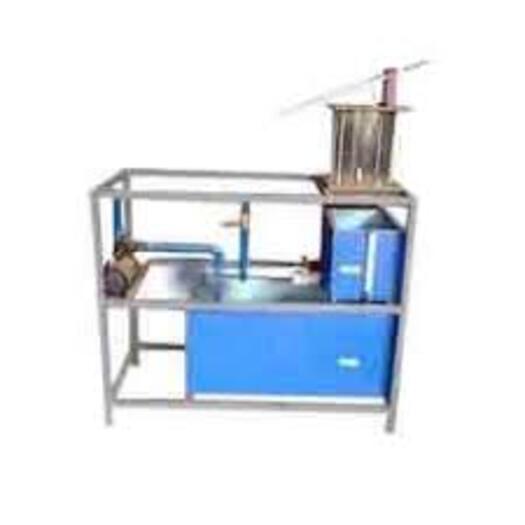
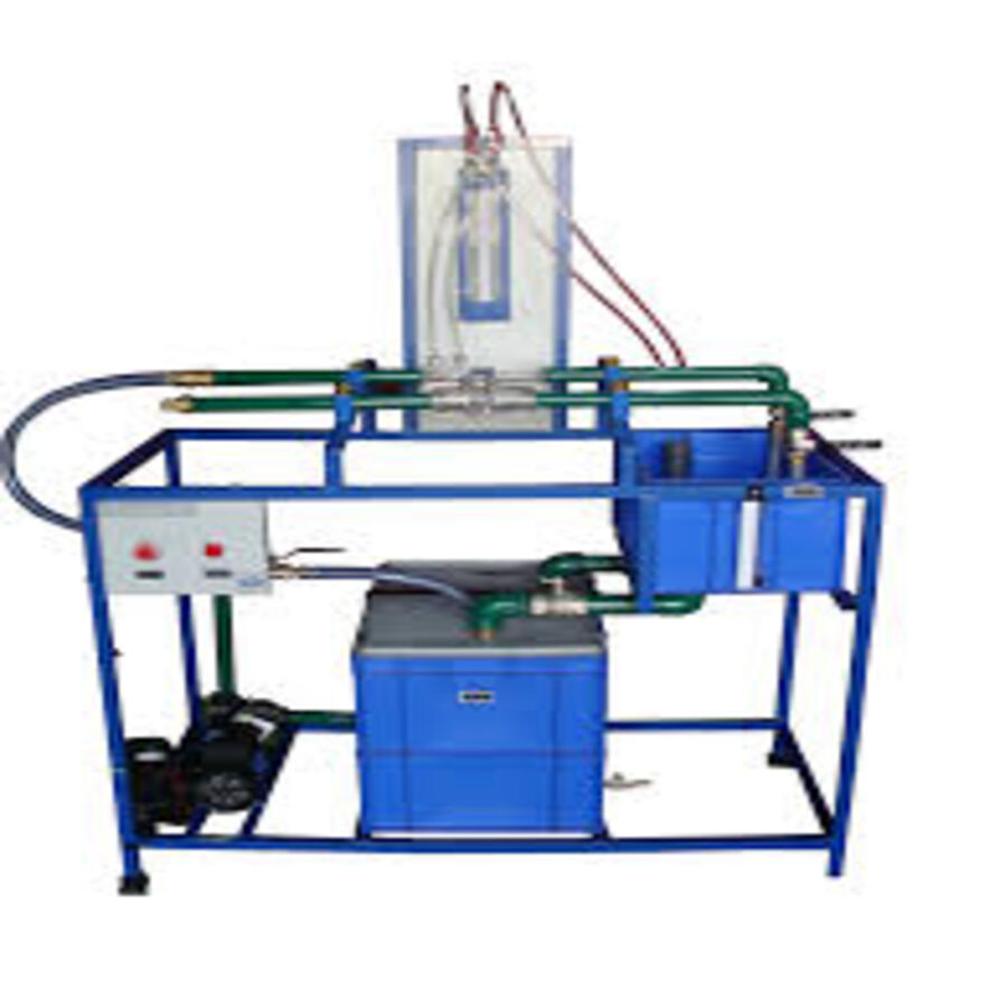
The apparatus consists of a closed-loop water circulation system comprising a sump tank, centrifugal pump, transparent test section, nozzle arrangement, interchangeable vanes, and force measurement mechanism. Water is continuously recirculated through the system, making the setup economical in water consumption and suitable for repeated laboratory experiments.
Different types of vanes such as flat plate, hemispherical cup, inclined plate, and curved vane are provided to analyze the effect of jet impact under varying flow conditions. The force generated by the water jet is balanced using calibrated weights or spring mechanism for accurate experimental observations.
Manufactured using high-quality materials and corrosion-resistant components, the Recirculating Type Jet Apparatus ensures reliable operation, durability, and ease of maintenance. Its compact and self-contained construction makes it ideal for educational and research applications.
Features
- Closed-loop recirculating water system
- Accurate study of impact of jet on vanes
- Water-saving and economical operation
- Transparent test section for clear observation
- Interchangeable vanes for multiple experiments
- Compact, sturdy, and corrosion-resistant construction
- Easy operation and maintenance
Applications
- Fluid mechanics laboratories
- Hydraulic engineering studies
- Engineering colleges and technical institutes
- Research and training centers
- Demonstration of momentum and jet impact principles
Typical Specifications
- Centrifugal pump with recirculating system
- Transparent working chamber
- Nozzle arrangement for water jet formation
- Set of interchangeable vanes
- Flow control valve provided
- Force balancing mechanism with weights
- Mounted on rigid frame structure
- Water collection and sump tank arrangement
Working Principle
The apparatus works on the principle of conservation of momentum. Water discharged through a nozzle forms a high-velocity jet that strikes different vanes. The force exerted by the jet on the vane is measured and compared with theoretical values calculated from momentum equations. The recirculating arrangement continuously reuses water, ensuring efficient and uninterrupted operation.
The apparatus is suitable for experiments on:
- Impact of jet on flat plate
- Impact of jet on curved vane
- Verification of momentum equation
- Measurement of force developed by water jets
- Hydraulic and fluid flow analysis
Precise Hydrodynamic ExperimentationThis apparatus delivers hands-on opportunities to analyze fluid dynamics, specifically the impact of a water jet and momentum transfer. The unit provides fine control over nozzle diameter and flow rate, with a graduated observation scale and accurate measurements. Its closed-loop circulation reduces water usage and maintains consistent testing conditions throughout multiple experiments.
Durable and User-Friendly DesignFabricated with corrosion-resistant stainless steel and PVC/brass piping, all wetted parts are built for long-term use. The powder-coated steel frame adds extra protection, while the quick-connect coupling system and manual control interface ensure easy operation and swift setup. The apparatus is suitable for a variety of laboratory settings, thanks to its compact, mobile, and robust construction.
Safety and Compliance AssuredEquipped with a thermal overload relay and constructed in accordance with IS 8034 laboratory standards, the apparatus prioritizes both user and equipment protection. Its noise level remains below 60 dB, making it suitable for academic environments. Overflow protection and precise measurement controls enhance the operational safety and integrity of experimental procedures.
FAQ's of RECIRC-ULATING TYPE JET APPARATUS:
Q: How does the recirculating type jet apparatus function in laboratory experiments?
A: The apparatus circulates water from a closed-loop reservoir through an adjustable jet nozzle to strike a target specimen, allowing users to measure and study jet impact and momentum transfer. Water is collected and returned to the reservoir, enabling continuous experimentation with minimal water waste.
Q: What benefits does the stainless steel construction offer for this equipment?
A: Stainless steel is highly resistant to corrosion, which prolongs the lifespan of the tank and nozzle even under repeated exposure to water. This guarantees reliability, easy maintenance, and accurate results over extended laboratory use.
Q: When is overflow protection active during operation?
A: Overflow protection is automatically active whenever the recirculating reservoir approaches its capacity during operation, preventing spillage and ensuring that experiments can be run safely and responsibly.
Q: Where should the jet apparatus be installed for optimal use?
A: The apparatus is designed for tabletop bench mounting in laboratory environments. Ensure proximity to water and electrical connections as required, and situate on a stable surface capable of supporting approximately 35 kg.
Q: What is the process for adjusting the jet nozzle or changing test parameters?
A: The apparatus features a standard 8 mm interchangeable nozzle. To alter test parameters, simply swap the nozzle for another diameter, adjust the control valve to set flow rate, and read measurements on the graduated scale or optional digital display.
Q: How is safety ensured during equipment usage?
A: Safety measures include a thermal overload relay for the pump to prevent overheating, closed-loop design for water containment, and compliance with IS 8034 standards to ensure operational safety. The noise level remains below 60 dB, providing a safe and comfortable environment.
Q: What are the primary advantages of a recirculating water system in the apparatus?
A: The recirculating system conserves water, maintains consistent testing conditions, and enables uninterrupted experimentation. It also supports environmental sustainability by minimizing water consumption during repeated tests.

 Send Inquiry



 Send Inquiry


 Send Inquiry