Concrete Permeability Apparatus About
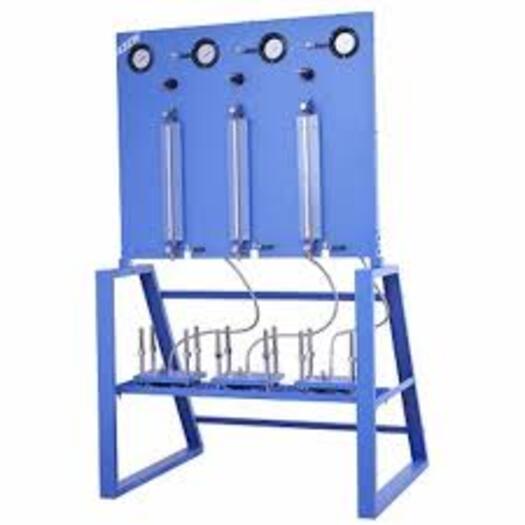
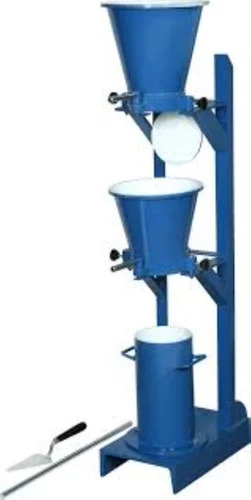
A Concrete Permeability Apparatus is a laboratory testing equipment used to determine the permeability of hardened concrete. It measures the ability of water or other fluids to pass through concrete under pressure, helping assess the durability, density, and quality of the concrete mix.
This apparatus is widely used in construction material testing laboratories, research institutions, and quality control departments to ensure that concrete structures are resistant to water penetration and long-term deterioration.
Key Features
- Accurate measurement of water permeability in concrete
- Heavy-duty and leak-proof testing chamber
- Designed for high-pressure water testing
- Corrosion-resistant construction for long service life
- Easy operation and maintenance
- Stable and reliable test performance
Technical Specifications (Typical)
- Material: Mild Steel / Stainless Steel
- Pressure Range: Up to 1520 bar (varies by model)
- Specimen Size: Standard concrete cube/cylinder
- Pressure System: Water pressure pump based
- Sealing: Rubber gasket for leak-proof testing
- Finish: Powder-coated / corrosion-resistant
Applications
- Testing durability of hardened concrete
- Construction material testing laboratories
- Civil engineering research institutions
- Quality control in infrastructure projects
- Bridge, dam, and water-retaining structure analysis
Advantages
- Helps evaluate concrete durability and porosity
- Ensures water resistance of structures
- Detects weak or porous concrete mixes
- Essential for long-term performance assessment
- Improves construction quality control standards
Additional Information
The Concrete Permeability Apparatus is an essential testing instrument used to determine the resistance of concrete against water penetration. It plays a crucial role in ensuring the durability and longevity of structures exposed to moisture and harsh environmental conditions.
Durable and Versatile Chamber OptionsThe apparatus is available in powder-coated mild steel and an optional stainless steel variant, offering flexibility based on durability and corrosion resistance needs. Its industrial construction ensures long service life, making it ideal for intensive laboratory applications involving frequent specimen testing.
Efficient Three-Specimen TestingCapable of simultaneously assessing three concrete samples, this apparatus supports a high-throughput approach in labs. The removable plunger mechanism and robust clamping facilitate easy placement and removal, streamlining workflows and reducing operator downtime between tests.
Certified Accuracy and Immediate DisplayEach unit comes with a factory-calibrated, certified analog pressure gauge, providing real-time readings with up to 1% full-scale accuracy and 0.1 kg/cm2 resolution. This certification ensures reliability for results, enhancing confidence in permeability measurements for both routine QA and research analyses.
FAQ's of Concrete Permeability Apparatus:
Q: How does the Concrete Permeability Apparatus test concrete specimens?
A: The apparatus subjects up to three concrete specimens to controlled water pressure using a calibrated analog gauge, measuring water permeability as per IS 3085 and ASTM C1202 standards. Specimens are sealed in chambers with a rubber gasket and clamped securely, and the water reservoir supplies consistent pressure throughout the test.
Q: What are the benefits of the dual chamber material options?
A: Users can select between powder-coated mild steel for general laboratory durability or stainless steel where enhanced corrosion resistance is required, ensuring longevity and suitability for varying environmental conditions.
Q: When is factory calibration of the pressure gauge verified?
A: Factory calibration is verified before shipment and accompanied by certification. This assures users of measurement accuracy and compliance with industry standards, supporting data reliability from the outset.
Q: Where is this apparatus intended to be used?
A: The unit is designed for laboratory environments, such as quality control labs in construction, research institutions, and material testing centers, where conformity to IS 3085 and similar standards is essential.
Q: What safety precautions are included during operation?
A: A safety pressure relief valve is integrated to automatically prevent excessive pressure buildup, protecting both users and specimens during testing.
Q: How is specimen placement and removal handled?
A: The design features a removable plunger mechanism and robust clamping arrangement with a rubber gasket, making it easy and secure to load and unload specimens, minimizing setup time and improving operational efficiency.

 Send Inquiry



 Send Inquiry


 Send Inquiry