Flakiness Index Gauge About
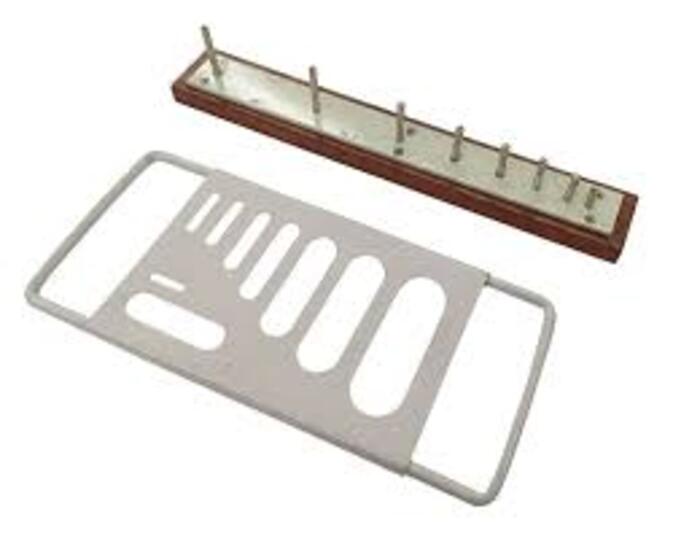
The Flakiness Index Gauge is a precision testing instrument used for determining the flakiness index of aggregates in civil engineering and road construction laboratories. It is widely used to evaluate the shape characteristics of coarse aggregates, ensuring suitability for use in concrete and bituminous works.
This gauge is designed with accurately machined slots of standard dimensions through which aggregate particles are passed. Particles that pass through the specified slots are classified as flaky, and the percentage of such particles indicates the flakiness index of the sample.
Manufactured from high-quality, wear-resistant metal, the Flakiness Index Gauge ensures durability, accuracy, and long service life even under frequent laboratory use. It is simple to operate and provides quick and reliable results.
Key Features:
- Precisely machined slots for accurate testing
- Made from high-quality wear-resistant metal
- Simple and quick testing procedure
- Durable and long-lasting construction
- Ensures reliable and repeatable results
- Suitable for routine laboratory use
Applications:
- Highway and road construction laboratories
- Civil engineering testing labs
- Construction material quality control
- Aggregate grading and analysis
- Infrastructure development projects
Working Principle:
Aggregate particles are passed through standardized slot openings. The percentage of particles that pass through indicates the flakiness index, which helps assess the shape and quality of aggregates for construction use.
Accurate Aggregate Shape AnalysisThe Flakiness Index Gauge enables effective determination of the flakiness index of aggregates, allowing civil engineering laboratories to assess the quality of construction materials. Its precision-cut slots ensure reliable results, while adherence to IS: 2386 (Part 1) standards guarantees industry compliance.
Robust and User-Friendly DesignCrafted from heavy gauge steel and finished with a durable powder coating, this gauge offers exceptional longevity and corrosion resistance. Its lightweight, portable construction and ergonomic design facilitate convenient handling and straightforward cleaning, making it suitable for daily laboratory use.
Flexible Slot Sizes and Efficient TestingWith slot sizes from 6.30mm up to 63.00mm, this gauge accommodates a wide range of aggregate specimens. Manual operation allows immediate testing of multiple samples, providing flexibility and efficiency-meeting the needs of modern material testing labs.
FAQ's of Flakiness Index Gauge:
Q: How do you use the Flakiness Index Gauge for aggregate shape analysis?
A: To use the Flakiness Index Gauge, pass each aggregate through the relevant slot sizes as specified by IS: 2386 (Part 1). Only aggregates that pass through the appropriate slots are considered flaky, which are then weighed to calculate the flakiness index. The process is fully manual and supported by the included instruction manual.
Q: What is the benefit of using a Flakiness Index Gauge in civil engineering labs?
A: Using a Flakiness Index Gauge provides reliable, standardized measurements of aggregate flakiness, ensuring construction materials meet required specifications. It helps engineers assess aggregate quality, which directly influences the strength and durability of concrete and asphalt mixes.
Q: When should the Flakiness Index test be performed?
A: The test should be performed during aggregate quality control procedures-usually before the aggregates are used in concrete or asphalt production for construction projects. Regular testing ensures compliance with IS: 2386 (Part 1) and project requirements.
Q: Where can the Flakiness Index Gauge be used?
A: This gauge is suitable for laboratory settings, particularly in civil engineering labs, quality control units of construction companies, and academic institutions involved in material testing and research.
Q: What is the process for cleaning and maintaining the Flakiness Index Gauge?
A: Cleaning is straightforward due to its powder-coated, corrosion-resistant finish. Simply wipe the frame and slots with a dry or slightly damp cloth after use. Regular maintenance checks for slot integrity and frame condition will ensure continued accuracy and durability.
Q: Can multiple aggregate specimens be tested at once with this gauge?
A: Yes, the Flakiness Index Gauge is designed to allow multiple aggregates to be tested simultaneously, increasing testing efficiency and throughput in the laboratory.
Q: What aggregate sizes are compatible with the Flakiness Index Gauge?
A: It accommodates aggregates within the 10 mm to 63 mm range, aligning with the slots provided and meeting IS: 2386 (Part 1) standards for laboratory testing.

 Send Inquiry



 Send Inquiry


 Send Inquiry