Laboratory Desiccator About
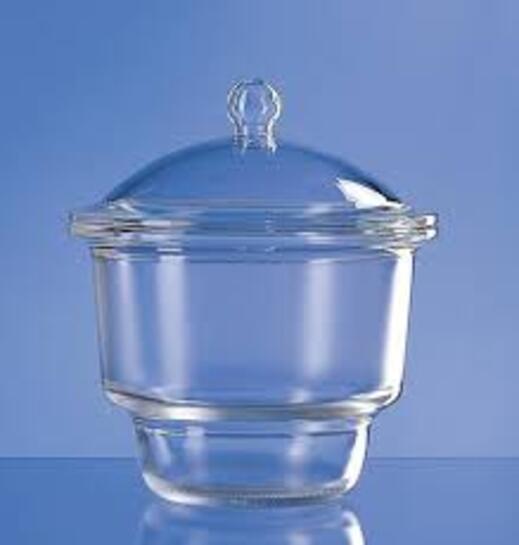
We offer high-quality Laboratory Desiccators, designed to maintain a dry and moisture-free environment for storing hygroscopic substances and sensitive samples. These desiccators are widely used in chemical, pharmaceutical, and research laboratories for drying and preserving materials.
The desiccator works by placing a desiccant (such as silica gel or calcium chloride) inside the chamber, which absorbs moisture and keeps the internal environment dry.
Key Features
- Made from borosilicate glass / polypropylene / polycarbonate
- Airtight sealing with ground flange or gasket
- Comes with porcelain plate for sample placement
- Available in vacuum and non-vacuum types
- High chemical resistance
- Transparent body for easy monitoring
- Durable and easy to clean
Types of Laboratory Desiccators
- Plain Desiccator Basic moisture protection
- Vacuum Desiccator Faster drying using vacuum pump
- Plastic Desiccator (PP/PC) Lightweight and durable
- Cabinet Desiccator Large storage capacity
Superior Airtight ProtectionEquipped with a high-quality silicon gasket and manual lid control, this desiccator maintains an airtight seal to prevent moisture ingress. Its transparent borosilicate glass body ensures easy monitoring without disturbing the internal environment, making it ideal for delicate and moisture-sensitive sample handling.
Adaptable for Vacuum and Non-Vacuum NeedsAvailable in both vacuum and non-vacuum models, this laboratory desiccator suits diverse applications. Vacuum models are equipped with a secure stopcock, enabling efficient vacuum up to -740 mm Hg. Non-vacuum variants offer robust protection for everyday sample storage and drying.
Built for Chemical Resistance and DurabilityManufactured using borosilicate glass with a polypropylene or polycarbonate lid, this desiccator offers excellent chemical and temperature resistance, tolerating up to 120C. Replaceable parts and a porcelain disc add to longevity and user convenience.
FAQ's of Laboratory Desiccator:
Q: How do I operate the laboratory desiccator for drying samples?
A: To use the desiccator, simply open the manual lid, place your samples on the included porcelain disc, add the desiccant plate, and close the lid securely. For vacuum models, connect the stopcock to a vacuum pump and apply vacuum up to -740 mm Hg. Always ensure the silicon gasket is properly seated for airtight closure.
Q: What materials are used in the construction of this desiccator?
A: The main chamber is made from heavy-duty borosilicate glass, offering chemical resistance and clarity. The lid is crafted from durable polycarbonate or polypropylene (depending on the model), with silicon gaskets for sealing. The base plate is a porcelain disc for stability and chemical compatibility.
Q: When should I replace the gasket or other components?
A: It is advisable to inspect the gasket and other replaceable parts periodically. If you notice cracks, loss of flexibility, or reduced sealing capability, replace the gasket to maintain an airtight environment. Other components should be replaced as needed to preserve desiccator performance.
Q: Where can this laboratory desiccator be used effectively?
A: This desiccator is suitable for use in laboratories, research institutes, industrial quality control departments, academic settings, and anywhere moisture-sensitive storage or drying is required.
Q: What is the maximum operating temperature and capacity?
A: The desiccator is rated for temperature resistance up to 120C and is available in sizes with capacities from 4 to 10 litres, making it versatile for various laboratory and industrial needs.
Q: How does the transparent body benefit laboratory work?
A: The clear borosilicate glass body allows users to visually monitor samples and humidity conditions without opening the lid, reducing risk of contamination and helping maintain a stable internal atmosphere.
Q: What are the main advantages of using a vacuum desiccator over a non-vacuum model?
A: Vacuum desiccators enable faster and more efficient moisture removal by lowering air pressure, which is crucial for highly sensitive samples or expedited drying. Non-vacuum models still provide substantial protection but at ambient atmospheric pressure.

 Send Inquiry



 Send Inquiry


 Send Inquiry