Tensile Testing Machine About
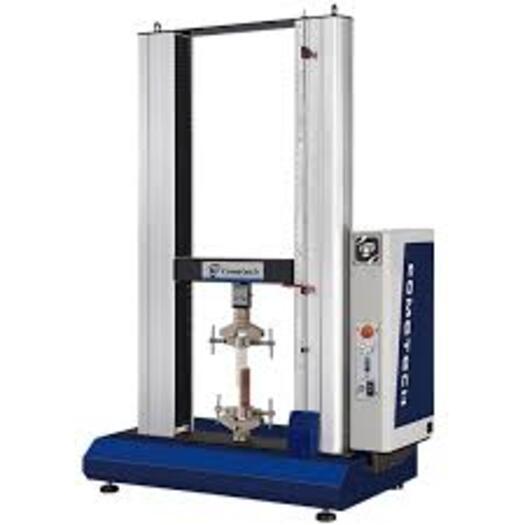
A Tensile Testing Machine is a precision material testing instrument used to determine the tensile strength, elongation, yield strength, and breaking point of materials such as metals, plastics, rubber, wires, and composites. It applies a controlled pulling force on a specimen until it deforms or fractures, helping evaluate its mechanical behavior under tension.
This machine is widely used in metallurgical laboratories, manufacturing industries, automotive sectors, construction material testing labs, and research institutions for quality control and product development.
Key Features
- High-precision load measurement system (load cell / hydraulic system)
- Digital / computerized control with data acquisition software (model dependent)
- Rigid and vibration-free frame structure for accurate results
- Adjustable crosshead speed for different testing requirements
- Wide range of load capacities (as per model)
- Safety enclosure for operator protection
- Compatible with ASTM / ISO / BIS testing standards
- Real-time display of load, elongation, and stress-strain data
Working Principle
The machine works by applying a gradually increasing uniaxial tensile force to a test specimen held between two grips. As the load increases, the material stretches until it reaches its breaking point. The system records the force vs. elongation curve, which is used to calculate mechanical properties like tensile strength and modulus of elasticity.
Applications
- Metal and alloy testing (steel, aluminum, copper, etc.)
- Plastic and polymer testing
- Rubber and elastomer evaluation
- Wire, cable, and fastener testing
- Construction material testing
- Automotive and aerospace components
- Research and educational laboratories
Types Available
- Manual Tensile Testing Machine
- Motorized Tensile Testing Machine
- Hydraulic Tensile Testing Machine
- Computerized Universal Tensile Testing System
Advantages
- Accurate measurement of material strength properties
- Essential for quality assurance and R&D
- Helps prevent material failure in applications
- Easy operation with digital reporting (advanced models)
- Suitable for wide range of materials and industries
Technical Specifications (Typical)
- Load capacity: 5 kN to 1000 kN (as per model)
- Control system: Manual / Digital / Computerized
- Crosshead speed: Adjustable range
- Accuracy: High precision load cell system
- Display: Digital indicator / PC-based software
Advanced Material Testing SolutionThis Tensile Testing Machine combines flexibility and precision, meeting the demands of modern laboratories and industries. Its broad grip separation range and digital controls ensure accurate readings across diverse materials, including metals, rubbers, plastics, and textiles. Designed for reliability, it streamlines quality assurance and research processes.
User-Friendly Operation and SafetyWith intuitive microprocessor-based controls and a digital display, users can easily select testing parameters and measurement units according to specific needs. Overload and over-travel protections are built-in to safeguard both operators and samples during rigorous testing cycles.
FAQ's of Tensile Testing Machine:
Q: How is the testing speed adjusted on the Tensile Testing Machine?
A: The testing speed can be seamlessly set within the range of 10 to 250 mm/min through the machine's microprocessor or digital control system, allowing precise adaptation to various material testing requirements.
Q: What materials can be tested using this machine?
A: This machine is engineered to test metals, rubber, plastics, textiles, and a wide array of other materials, making it suitable for quality control, research, and development across numerous industries.
Q: When should overload and over-travel protections be used?
A: The overload and over-travel protection features are active during every test, ensuring the machine automatically prevents mechanical damage and potential hazards if force or displacement limits are exceeded.
Q: Where is this machine manufactured and supplied?
A: The Tensile Testing Machine is manufactured, supplied, and serviced throughout India, with leading manufacturers, authorized service providers, traders, and suppliers supporting installation and maintenance.
Q: What is the process for switching measuring units?
A: Users can select their preferred measurement units-kilogram-force (kgf), Newton (N), or kiloNewton (kN)-directly from the digital interface prior to or during each test for versatile reporting and analysis.
Q: How does the machine ensure reliable results during testing?
A: Equipped with a digital load cell for force measurement, the machine guarantees high accuracy and repeatability, while robust construction minimizes vibrations and environmental interference.
Q: What are the benefits of using this tensile testing machine?
A: Key benefits include enhanced testing accuracy, flexible operation for a range of material types, built-in safety protections, and simple digital controls, making it an efficient solution for both industrial and laboratory environments.

 Send Inquiry


 Send Inquiry


 Send Inquiry