Torsion Fatigue Testing Machine About
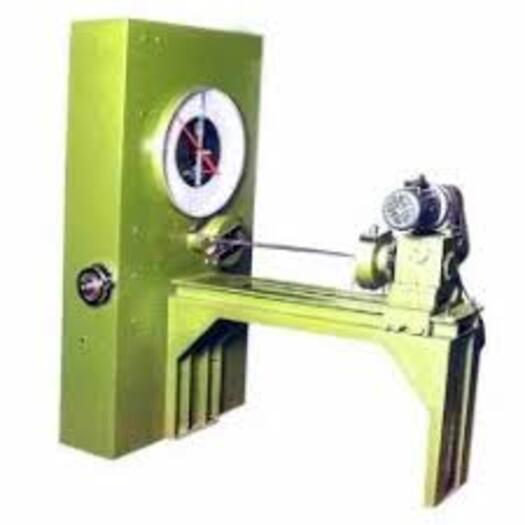
A Torsion Fatigue Testing Machine is a precision material testing instrument used to evaluate the fatigue strength and endurance of materials under repeated torsional (twisting) loads. It determines how materials such as metals, alloys, wires, and shafts behave when subjected to cyclic torque until failure occurs.
This machine is widely used in mechanical engineering laboratories, automotive industries, aerospace sectors, research institutions, and quality control departments for studying material durability and life cycle performance.
Key Features
- High-precision torque application system for cyclic loading
- Adjustable speed for variable fatigue testing conditions
- Digital counter for number of cycles
- Rigid and vibration-free heavy-duty frame
- Specimen holding chucks with strong grip mechanism
- Forward and reverse torsional loading capability
- Safety enclosure for operator protection
- Suitable for long-duration endurance testing
Working Principle
The machine applies a repeated twisting (torsional) load on a specimen at a controlled speed. The material is subjected to continuous cyclic stress until it fails. The number of cycles endured before failure is recorded as the fatigue life of the material, helping determine its resistance to torsional stress over time.
Applications
- Fatigue testing of shafts, rods, wires, and fasteners
- Automotive component testing (drive shafts, axles)
- Aerospace material evaluation
- Mechanical component design validation
- Research and development laboratories
- Industrial quality assurance testing
Advantages
- Accurately determines material fatigue life
- Helps prevent failure in rotating machine components
- Essential for design and safety analysis
- Suitable for long-duration testing cycles
- Reliable and repeatable test results
Technical Specifications (Typical)
- Torque capacity: As per model (e.g., 10 Nm to 2000 Nm)
- Speed range: Adjustable for fatigue cycles
- Cycle counter: Digital display
- Specimen type: Rods, wires, shafts, fasteners
- Operation: Motorized continuous cyclic loading system
- Frame: Heavy-duty steel construction
Advanced Control and Display FeaturesThis machine integrates a microprocessor-based control panel with both digital and analog displays, providing users with clear, accurate readouts and efficient adjustment capabilities. The dual display system allows easy monitoring during torsion, fatigue, and reverse torsion testing processes, enhancing both precision and usability in laboratory environments.
Superior Testing Versatility and SafetyEngineered with heavy-duty clamping forks and multiple test modes-including fatigue, torsion, and repeated reverse torsion-the machine is extremely versatile. It features robust safety measures such as overload protection and an emergency stop button, safeguarding the operator and the sample throughout high-stress material experiments.
FAQ's of Torsion Fatigue Testing Machine:
Q: How does the Torsion Fatigue Testing Machine operate for different test modes?
A: The machine conducts three primary tests: fatigue, standard torsion, and repeated reverse torsion. By securely fixing the specimen in heavy-duty clamping forks, the operator selects the desired mode via the digital control panel. The microprocessor then administers controlled torsional cycles according to set parameters, capturing data for analysis.
Q: What types of specimens are compatible with this machine?
A: This testing machine is suitable for a wide range of specimens, including metal, alloy, and engineering plastics. Its robust fixture design supports diverse sizes and geometries commonly encountered in research and mechanical testing applications.
Q: When is it beneficial to use the USB or printer port data output?
A: The USB and printer port outputs are particularly useful for users who need to quickly store, archive, or print test data for documentation, further analysis, or regulatory compliance. These features streamline report creation and data sharing in lab and research environments.
Q: Where is this testing machine commonly utilized?
A: It is widely used in material science laboratories, mechanical testing centers, research and development facilities, and quality assurance departments-especially within industries focusing on metals, alloys, and advanced plastics.
Q: What is the process for ensuring operator safety during testing?
A: Before initiating testing, the operator engages the overload protection and ensures the emergency stop is accessible. The machine's built-in safety functions are activated throughout the test, automatically halting operation if unsafe loads or conditions are detected.
Q: How does the microprocessor-based control panel enhance testing?
A: The microprocessor-based panel allows precise setting of test cycles, angles (ranging from 0 to 9999 degrees), and modes while providing accurate feedback through digital and analog displays. This simplifies test repeatability and enhances data reliability.

 Send Inquiry


 Send Inquiry


 Send Inquiry