Volume Change Apparatus About
The Volume Change Apparatus is a precision laboratory testing instrument used for determining the volume expansion or shrinkage of cement mortar and concrete specimens under controlled conditions. It is widely used in construction material testing laboratories to assess the dimensional stability and long-term performance of cement-based materials.
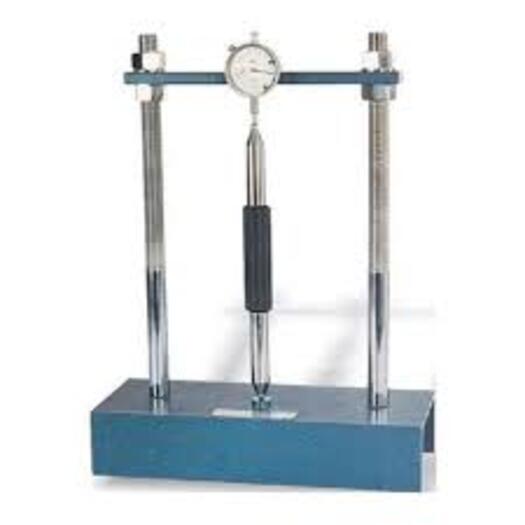
This apparatus is designed with a rigid frame and accurately calibrated measuring system to detect even minor changes in specimen volume. It helps in evaluating the soundness and durability of cement by measuring expansion caused by chemical reactions or improper curing.
Manufactured using high-quality, corrosion-resistant materials, the Volume Change Apparatus ensures durability, accuracy, and consistent performance in laboratory environments. It is suitable for routine quality control and advanced material research applications.
Key Features:
- High-precision measurement system for volume change detection
- Rigid and stable frame construction
- Corrosion-resistant components for long service life
- Easy-to-read graduated scale for accurate readings
- Suitable for long-duration testing
- Low maintenance and reliable operation
Applications:
- Cement and concrete testing laboratories
- Civil engineering research institutions
- Construction material quality control departments
- Infrastructure development projects
- Academic and training laboratories
Working Principle:
The apparatus measures dimensional changes in cement or mortar specimens over time under controlled conditions. Any expansion or shrinkage is recorded to evaluate the materials stability and suitability for construction use.
Accurate Volume Change MeasurementThis apparatus provides precise measurement of soil specimen volume changes, essential for laboratories involved in geotechnical analysis. The accuracy of 0.01 mm, combined with a manually operated dial gauge and cylinder graduated in 1 ml increments, ensures reliable readings in accordance with IS 2720 (Part 15):1986 and ASTM D4546 standards.
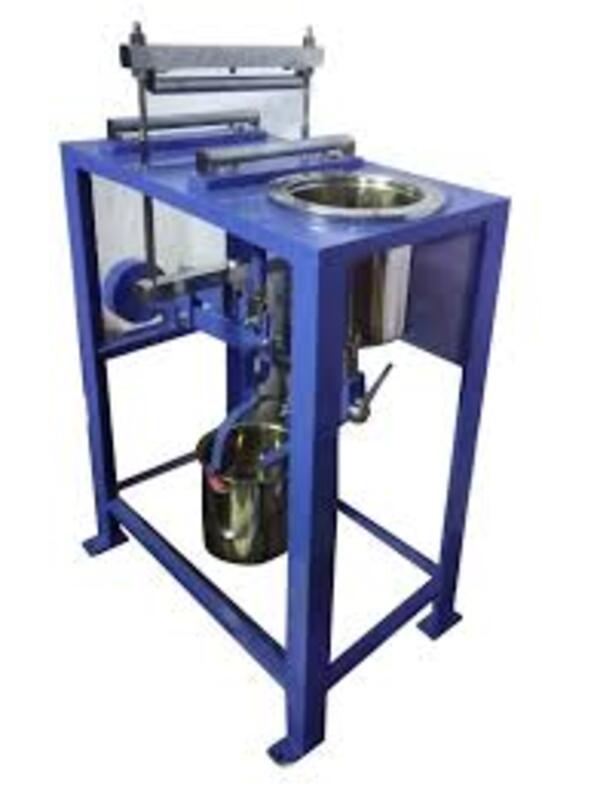
Sturdy and Corrosion-Resistant ConstructionManufactured on a mild steel frame with powder coating and stainless steel components, the device is engineered for long-lasting performance and resistance to rust or chemical exposure. Its portable, bench/tabletop design makes it suitable for most laboratory environments.
Effortless Manual OperationWith no requirement for external power, the manual mechanism is straightforward to use and provides immediate response and control. The apparatus is designed for swift setup, simple adjustments, and clear mechanical measurements, ensuring smooth workflows during laboratory soil testing.
FAQ's of Volume Change Apparatus:
Q: How is the Volume Change Apparatus used in laboratory soil testing?
A: The apparatus is used by placing a saturated soil specimen into the water bath, adjusting for zero using the dial gauge, then monitoring volume changes as the soil undergoes swelling, shrinkage, or consolidation. Measurements are read manually via the dial gauge and graduated cylinder.
Q: What sizes of soil specimens can be tested with this apparatus?
A: The device accommodates standard specimen sizes of 38 mm or 100 mm in diameter with a fixed height of 20 mm, as per common laboratory and standard soil testing requirements.
Q: When should this apparatus be used during geotechnical investigations?
A: This apparatus is utilized when precise measurement of volume change in soil samples is necessary, particularly during consolidation or swelling-shrinkage tests outlined in IS 2720 (Part 15):1986 or ASTM D4546.
Q: Where is it most appropriate to install and operate this equipment?
A: The apparatus is intended for use on a bench or tabletop in a laboratory dedicated to soil mechanics and geotechnical testing, as it is portable and does not require external power supply.
Q: What process does the device follow to measure volume change?
A: The specimen is placed in the water bath, and changes in its volume are indicated by the movement shown on the dial gauge and corresponding graduated cylinder, allowing calculation of volume alteration over a range up to 12 mm.
Q: Why choose a manual Volume Change Apparatus over automated options?
A: Manual operation ensures direct control, immediate response time, and no dependency on electrical power, making the setup more portable, cost-effective, and easier to maintain in varied laboratory conditions.
Q: What are the main benefits of this instrument for soil testing professionals?
A: Key advantages include its high measurement accuracy, robust and corrosion-resistant build, straightforward manual operation, portability, adherence to international testing standards, and suitability for a wide range of laboratory soil analyses.

 Send Inquiry




 Send Inquiry


 Send Inquiry