Digital Universal Testing Machine About
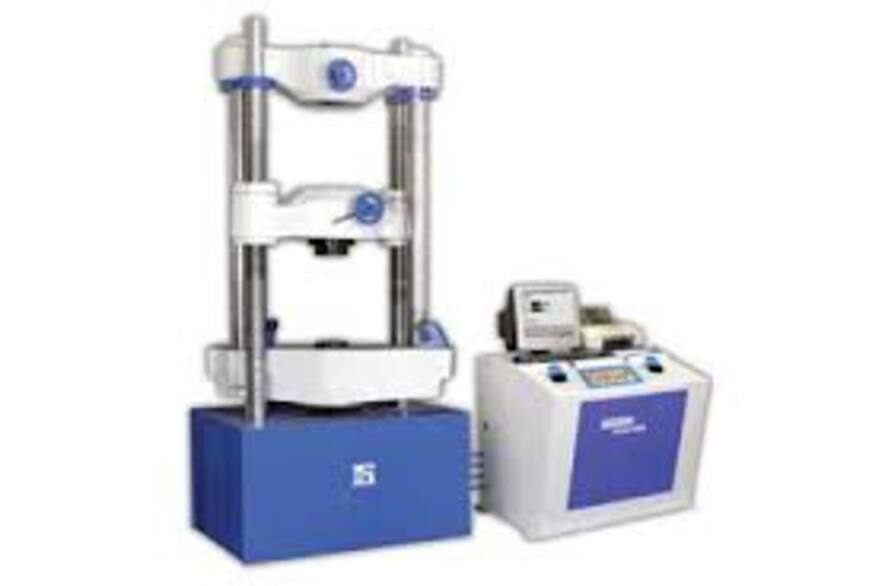
A Digital Universal Testing Machine (Digital UTM) is an advanced material testing instrument used to determine the mechanical properties of materials such as tensile strength, compressive strength, flexural strength, shear strength, and elongation. It provides accurate, real-time digital readings for stress, load, and deformation, making it ideal for modern quality control and research applications.
This machine is widely used in metallurgical laboratories, construction industries, automotive sectors, research institutes, and engineering colleges for precise material evaluation.
Key Features
- Digital display system for real-time load and elongation readings
- High-precision load cell for accurate measurement
- Computerized model available with software for data analysis
- Rigid frame structure (two-column or four-column design)
- Adjustable crosshead speed for different test requirements
- Hydraulic or electromechanical loading system (model dependent)
- Safety protection system for operator safety
- Compatible with ASTM / ISO / BIS testing standards
Working Principle
The Digital UTM applies a controlled and gradually increasing force on a test specimen until it deforms or breaks. Sensors measure the applied load and displacement, which are displayed digitally or processed through software to generate a stress-strain curve. This helps determine key mechanical properties such as yield strength, ultimate tensile strength, and modulus of elasticity.
Applications
- Metal and alloy testing
- Plastic, rubber, and polymer testing
- Construction material testing (cement, steel, rebar)
- Automotive component testing
- Aerospace material validation
- Research and development laboratories
- Educational engineering institutions
Types Available
- Digital Display UTM
- Computerized Universal Testing Machine
- Hydraulic Digital UTM
- Servo-Controlled UTM Systems
Advantages
- Highly accurate and reliable digital output
- Easy data recording and analysis
- Suitable for wide range of materials
- Enhances quality control and product reliability
- Reduces manual errors with automated measurement
Technical Specifications (Typical)
- Load capacity: 5 kN to 2000 kN (as per model)
- Control system: Digital / Computerized software-based
- Display: LCD / PC interface
- Crosshead speed: Adjustable range
- Accuracy: High precision load cell system
- Frame: Heavy-duty steel construction
Versatile Testing PerformanceDesigned to accommodate a wide variety of materials, the machine supports tensile, compression, and bending tests thanks to its universal grips and extensive measuring range. Its robust and rigid two-column frame maintains stability during rigorous testing tasks, ensuring reliable test outcomes every time.
Intelligent Data Handling & SafetyFeaturing digital data outputs via RS232 or USB, the machine seamlessly integrates with modern analysis systems. Equipped with overload and over-travel protection, it prioritizes operator and equipment safety during continuous operations in labs and industrial environments.
Customizable & User-Centric FeaturesCustomers can tailor the measuring range to meet specific requirements. The kit includes an extensometer, compression plates, and bending fixtures, making it straightforward to set up for a wide array of material testing needs, all within a compact installation area.
FAQ's of Digital Universal Testing Machine:
Q: How is load measuring accuracy maintained in the Digital Universal Testing Machine?
A: This machine utilizes high-precision sensors and advanced electronic controls to ensure a load measuring accuracy of 1%, making it suitable for both routine tests and critical quality assurance processes.
Q: What type of tests can be performed using the universal grips and included accessories?
A: The universal grips and supplied accessories allow users to conduct tensile, compression, and bending tests on a wide range of materials, supporting research, development, and quality control in various industries.
Q: When should I consider customizing the measuring range of the machine?
A: Customization is recommended when your testing requirements exceed the standard 100 kN range. Manufacturers offer this flexibility to accommodate higher or lower load specifications based on your specific application needs.
Q: Where should the Digital Universal Testing Machine be installed?
A: The machine requires an installation area of approximately 1000 x 700 mm and is best situated in controlled laboratory or industrial environments within the operating temperature range of 10C to 40C.
Q: What is the process for data retrieval and analysis from the machine?
A: Results can be directly exported via RS232 or USB to compatible computers, supporting seamless integration with standard data analysis software for report generation and advanced material evaluation.
Q: How does the machine enhance user and equipment safety during testing?
A: Safety features, including overload and over-travel protection, are integrated to automatically halt operations in the event of abnormal loads or crosshead movement, protecting both the operator and the equipment.
Q: What are the advantages of the rigid two-column frame design?
A: The rigid two-column frame minimizes deformation during tests, ensuring consistent and accurate force application. This stability results in improved reliability and repeatability of your testing data.

 Send Inquiry


 Send Inquiry


 Send Inquiry