About Spring Testing Machines
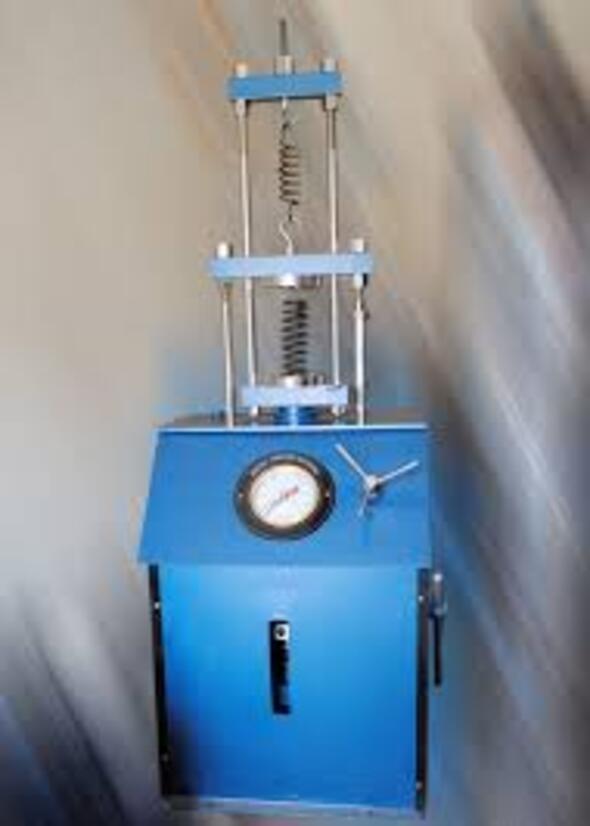
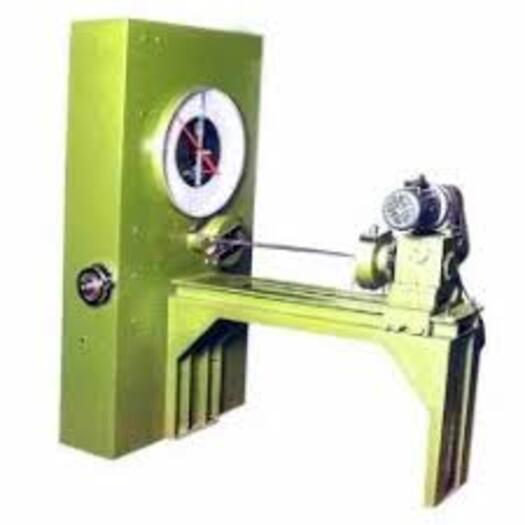
A Spring Testing Machine is a precision laboratory and industrial instrument used to determine the load-deflection characteristics, stiffness (spring constant), compression, and tension properties of various types of springs. It ensures that springs meet required performance standards for safety, durability, and functionality.
This machine is widely used in automotive industries, manufacturing units, railway workshops, aerospace sectors, engineering laboratories, and quality control departments.
Key Features
- High-precision load measurement system (digital / analog)
- Measures both compression and tension springs
- Rigid and vibration-free heavy-duty frame
- Adjustable travel length for different spring sizes
- Digital display of load and deflection values (advanced models)
- Motorized or manual loading system
- Easy calibration and user-friendly operation
- Conforms to relevant ASTM / ISO testing standards
Working Principle
The machine applies a gradually increasing load on a spring, either in compression or tension mode, while measuring the corresponding deflection. The relationship between load and deflection is used to calculate the spring constant (stiffness) and evaluate the springs performance under working conditions.
Applications
- Automotive suspension springs
- Industrial compression and tension springs
- Railway and locomotive components
- Mechanical and electrical assemblies
- Quality control in manufacturing industries
- Research and development laboratories
- Educational engineering institutes
Types Available
- Manual Spring Testing Machine
- Digital Spring Testing Machine
- Motorized Spring Testing Machine
- Computerized Spring Testing System
Advantages
- Accurate measurement of spring stiffness
- Ensures quality and reliability of springs
- Suitable for both production and laboratory use
- Simple operation with quick results
- Helps in design validation and failure prevention
Technical Specifications (Typical)
- Load capacity: As per model (e.g., 50 N to 5000 N or higher)
- Measuring range: Compression and tension testing
- Display: Digital / analog indicator / computer interface
- Operation: Manual / motorized
- Accuracy: High-precision load cell system
- Frame: Heavy-duty steel construction
Precision & Flexibility in Spring TestingExperience highly accurate results every time with our Spring Testing Machines, capable of both tension and compression tests. The 1% reading accuracy and availability in manual and automatic modes provide flexibility for different industry demands, ensuring dependability and consistency.
Robust Construction & Enhanced SafetyBuilt with a heavy-duty, rigid frame and finished with powder coating, these machines are engineered to withstand harsh environments and resist corrosion. Overload protection comes standard, enhancing user and equipment safety throughout testing operations.
FAQ's of Spring Testing Machines:
Q: How do I select the operation mode between manual and automatic on the Spring Testing Machine?
A: The operation mode can be chosen via the control panel or selector switch, depending on the model. Manual mode allows for hands-on testing, while automatic mode streamlines processes for repetitive testing or higher throughput.
Q: What benefits does 1% accuracy provide in spring testing applications?
A: A 1% reading accuracy ensures precise measurement of spring force, reducing error margins and supporting consistent product quality, which is essential for quality control in manufacturing and engineering environments.
Q: When should I use the variable test speed control feature?
A: Variable test speed control is beneficial when testing springs of different types and materials. Slower speeds improve accuracy for delicate springs, while higher speeds increase efficiency during bulk testing. This feature is mainly available in advanced machine models.
Q: Where can I view test results, and in which units are results displayed?
A: Test results are displayed on a digital or analog output panel. You can choose display units in kilograms, Newtons, or customize them to meet your specific requirements, ensuring compatibility with your preferred measurement system.
Q: What is the process of performing a tension or compression test on this machine?
A: Simply secure the spring in the provided clamps, select the desired test type and parameters, then initiate the test using the operation mode chosen. The machine applies force, records the response, and the results are displayed for review.
Q: How do the safety features, such as overload protection, benefit users?
A: Overload protection automatically halts testing if excessive force is detected, preventing damage to both the spring and the machine. This ensures operator safety and extends the equipment's operational life.

 Send Inquiry


 Send Inquiry


 Send Inquiry