Briquette Mould (Single) About
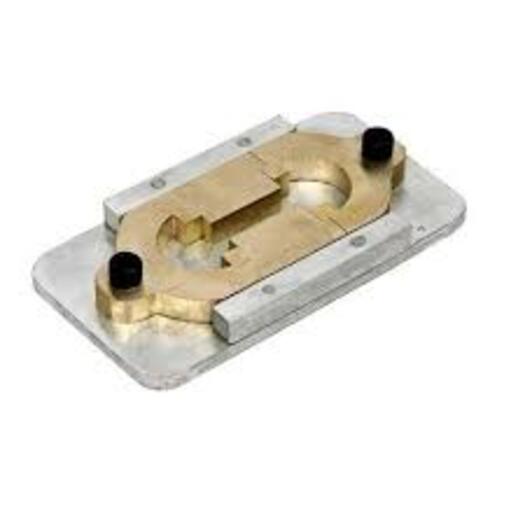
The Briquette Mould (Single) is a precision laboratory testing accessory used for preparing standard cement mortar briquettes for tensile strength testing. It is widely used in construction material testing laboratories to ensure accurate and consistent specimen preparation as per standard testing methods.
This mould is manufactured using high-quality cast iron or mild steel, ensuring strength, durability, and long service life. It is designed to produce single briquette specimens with accurate dimensions and smooth finish, enabling reliable and repeatable test results.
The robust construction and precision engineering of the mould ensure proper alignment and easy assembly/disassembly, making it suitable for routine laboratory use.
Key Features:
- Heavy-duty cast iron / mild steel construction
- Precision-machined for accurate specimen dimensions
- Corrosion-resistant and long-lasting
- Easy to assemble and dismantle
- Ensures uniform and smooth briquette formation
- Suitable for standard laboratory testing
Applications:
- Cement and mortar testing laboratories
- Civil engineering quality control departments
- Construction material testing facilities
- Academic and research institutions
- Infrastructure development projects
Working Principle:
The mould is filled with cement mortar mix, compacted properly, and allowed to set. The hardened briquette specimen is then used for tensile strength testing to evaluate the quality and performance of cement.
Robust Material and FinishManufactured from high-hardness cast iron or mild steel, our Single Briquette Mould is engineered for durability, precision, and resistance to wear and corrosion. The machined and powder-coated finish ensures long-term performance, even in demanding laboratory environments. A rust-resistant treatment enhances the service life of the mould, making it reliable for continuous use.
Accurate Specimen PreparationDesigned specifically for laboratory cement and mortar testing, this mould guarantees the production of standard briquette specimens. The split-type opening mechanism, featuring secure locking screws, allows easy and safe operation during the moulding and demoulding process while minimizing the risk of specimen damage. Manual control gives users precise handling throughout the test preparation.
Designed for Laboratory EfficiencyCompact and weighing approximately 1.8 kg, the Single Briquette Mould fits seamlessly onto laboratory benches. Its reusable and single-cavity nature enables efficient workflow by focusing on accurate, repeatable results for one specimen at a time. The mould's adaptability accommodates a range of mounting types, fulfilling multiple laboratory configurations and requirements.
FAQ's of Briquette Mould (Single):
Q: How do I use the Single Briquette Mould to prepare cement mortar specimens?
A: To use the Single Briquette Mould, first assemble the mould with its locking screws secured. Fill it manually with freshly mixed cement mortar, ensuring no air gaps. Smooth the surface and allow the specimen to set at ambient temperature. Once cured, unlock the split mechanism to demould the standard-sized briquette, ready for tensile strength testing.
Q: What are the benefits of the split-type opening mechanism with locking screws?
A: The split-type opening mechanism with locking screws allows for easy mould filling and demoulding while securely holding the cavity together during casting. This design reduces the risk of specimen breakage and ensures precise, consistent shaping of test briquettes, streamlining the laboratory workflow.
Q: When should I choose a cast iron or mild steel briquette mould?
A: Choose cast iron when you require maximum hardness, wear resistance, and long service life under frequent use. Mild steel moulds are suitable when cost or specific user requirements favor lighter weight or different handling properties. Both materials are treated for rust resistance and provide accurate results.
Q: Where can this briquette mould be mounted in a laboratory setup?
A: The Single Briquette Mould is designed for versatile mounting. It can be securely placed on laboratory benches, land-based platforms, or any stable surface, ensuring stable and safe operation during the specimen preparation process.
Q: What is the process for cleaning and maintaining the mould after use?
A: After each use, disassemble the mould by loosening the locking screws. Clean all surfaces thoroughly with a brush to remove mortar residue and rinse if necessary. Dry completely to prevent moisture buildup. Regular cleaning, combined with its powder-coated and rust-resistant finish, keeps the mould in optimal condition for continuous, reliable usage.
Q: What is the advantage of using a single cavity, manual briquette mould for laboratory testing?
A: A single cavity, manual briquette mould offers precise, repeatable specimen production by allowing close inspection of each test sample. Manual operation gives the user full control over specimen compaction, leading to reliable results in tensile strength testing of cement mortar in research or quality control settings.

 Send Inquiry



 Send Inquiry


 Send Inquiry